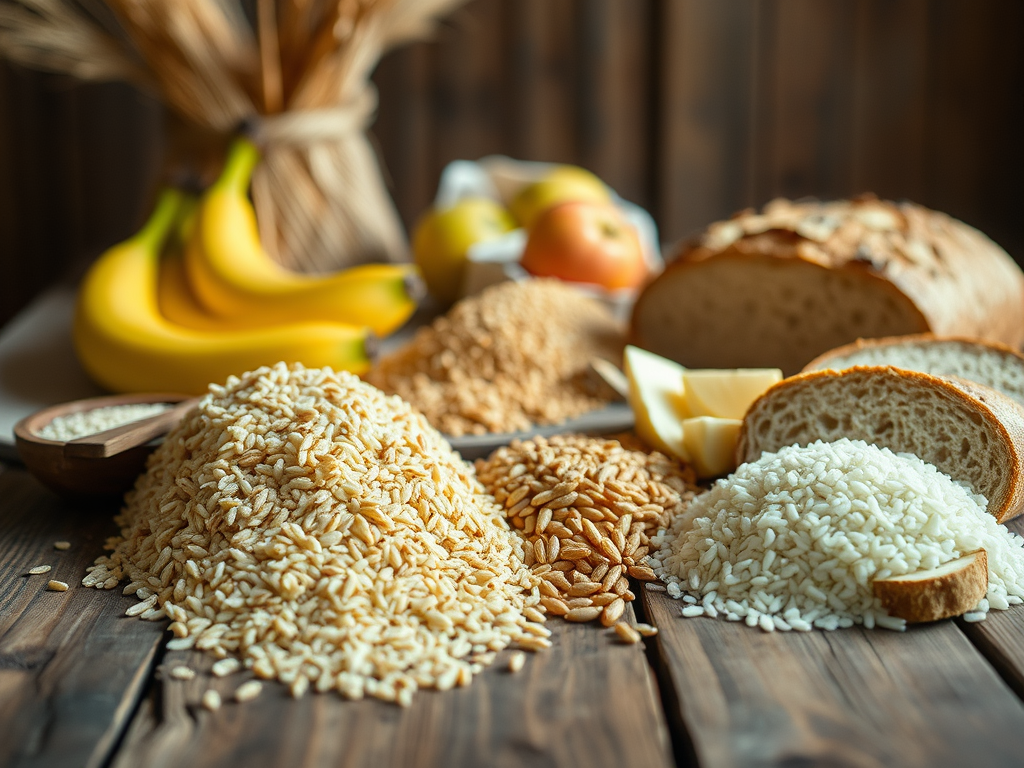
Carbohydrates are one of the three main nutrients essential for human life. Human civilization is said to have started with agriculture, allowing for a stable intake of nutrients found in grains like rice and wheat, as well as fruits rich in carbohydrates. Carbohydrates, encompassing sugars in general, range from simple monosaccharides to complex polymers made up of chains of monosaccharides. Depending on their size, carbohydrates are categorized as sugars, starches, and fibers. Sugars and starches are broken down and converted into glucose during digestion, which is then used by the body for energy. Fiber, on the other hand, is not fully digestible by the human body, though some can be broken down by gut microbiota. Despite not being fully digested, fiber aids in bowel movements, suppresses blood sugar spikes, lowers triglycerides in the blood, and provides a feeling of fullness, thus helping with weight management.
Previously, when we discussed “the science in beverages,” we covered sugars like sucrose. When consumed, sucrose, a disaccharide, is broken down into the monosaccharides glucose and fructose. Glucose is used immediately as an energy source, while fructose is either converted into glucose or used to synthesize fats. This process applies not only to sucrose but also to starches, which are similarly broken down into monosaccharides and used for energy. From the moment starches enter the mouth, they begin to break down, with the resulting small sugars eliciting a “sweet” taste detected by taste cells, prompting the brain to release dopamine for an immediate reward.
Our body’s response to sugars can be attributed to their essential role, but also because they were scarce in primitive times, making them difficult to obtain. Overconsumption of sugars, however, leads to health problems, including obesity, type 2 diabetes, liver disease, kidney disease, and hypertension.
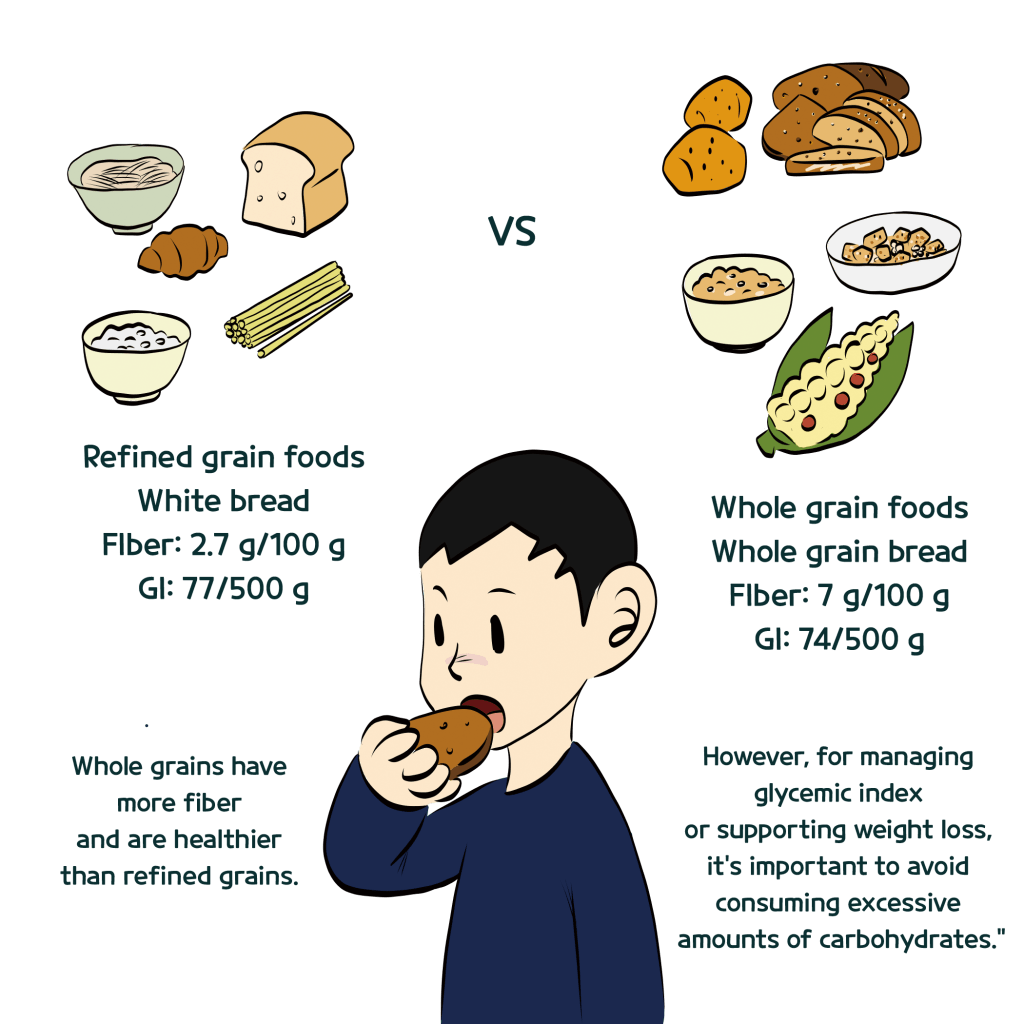
What about the effects of consuming other carbohydrates besides small sugars like sucrose and fructose? According to various sources, the effects of carbohydrates depend on their source, though this is not yet definitively categorized. Many sources suggest that to maintain a slim and healthy body, one should limit the intake of refined grains like wheat and rice flour. Refined grains have their fiber removed, leaving mostly starch. A famous celebrity claimed to have avoided foods made from refined grains like flour for years to manage weight, as shown on TV. A study published in the prestigious medical journal The Lancet in 2020 suggests that higher intake of whole grains and fibers can help prevent obesity, heart disease, diabetes, cancer, and reduce the risk of early death. Hence, whole grain bread and mixed or brown rice are preferable to white bread, noodles, and white rice. However, some studies report that whole grains are not necessarily more effective than refined grains for overall weight and fat loss. Despite ongoing debates, many studies agree that whole grains, with higher fiber and mineral content, are healthier than refined grains. For instance, some research suggests that consuming whole grains benefits blood sugar control compared to refined grains, though it might not prevent type 2 diabetes. Ultimately, while whole grains are healthier, excessive consumption can still hinder weight loss and the prevention of adult diseases, similar to how the “low-fat” labeling on processed milk leads to increased sugar intake.
One indicator of how carbohydrate-rich foods affect the body is the glycemic index (GI). The GI measures the potential of foods to raise blood sugar levels, recommending low-GI diets for weight loss. For example, the GI of 50g of white bread can be as high as 77, while whole grain bread is 74, and cereals are 81, indicating that whole grain foods do not necessarily have a low GI. In contrast, cabbage and spinach have GIs of 15 and 6, respectively, while meat, fish, and cheese have a GI of 0.
Recent studies suggest that mortality rates are lowest when carbohydrate intake is 50-60% of daily caloric intake. However, the average carbohydrate intake for Koreans is 67% of daily caloric intake, which is relatively high. Therefore, for a 2,000 kcal daily intake, limiting carbohydrate intake to 250-300g per day is recommended. Carbohydrates are essential nutrients, and insufficient intake leads to other health issues. Consuming less than 50% of daily caloric intake from carbohydrates increases mortality risk by 1.313 times, comparable to the 1.322 times increase when consuming more than 60%. Hence, wisely choosing carbohydrates is crucial, limiting foods and beverages high in sugars, preferring whole grains over refined grains, and managing overall carbohydrate intake while supplementing fiber through vegetables.
References
1. The Sugar Fix: The High-Fructose Fallout That Is Making You Fat and Sick, 1st Ed., Johnson, Potter/Ten Speed/Harmony/Rodale, 2008
2. The Story of the Human Body: Evolution, Health, and Disease, 1st Ed. Lieberman, Patheon Books, 2013
3. Business Insider, An Evolutionary Explanation For Why We Crave Sugar by Spector, Apr 25, 2014
4. Reynolds et al. Lancet, 2019, 393, 434-445
5. Pol et al. Am. J. Clin. Nutr. 2013, 98, 872-884
6. Sadeghi et al. Adv Nutr. 2020, 11, 280-292
7. Marventano et al. Nutrients, 2017, 9, 769
8. Honsek et al. Diabetologia 2018, 61, 1295-1305
9. Brand-Miller et al. Am. J. Clin. Nutr. 2009, 89, 97–105
10. Lee et al. Nutrients 2020, 12(10), 3208


Leave a Reply