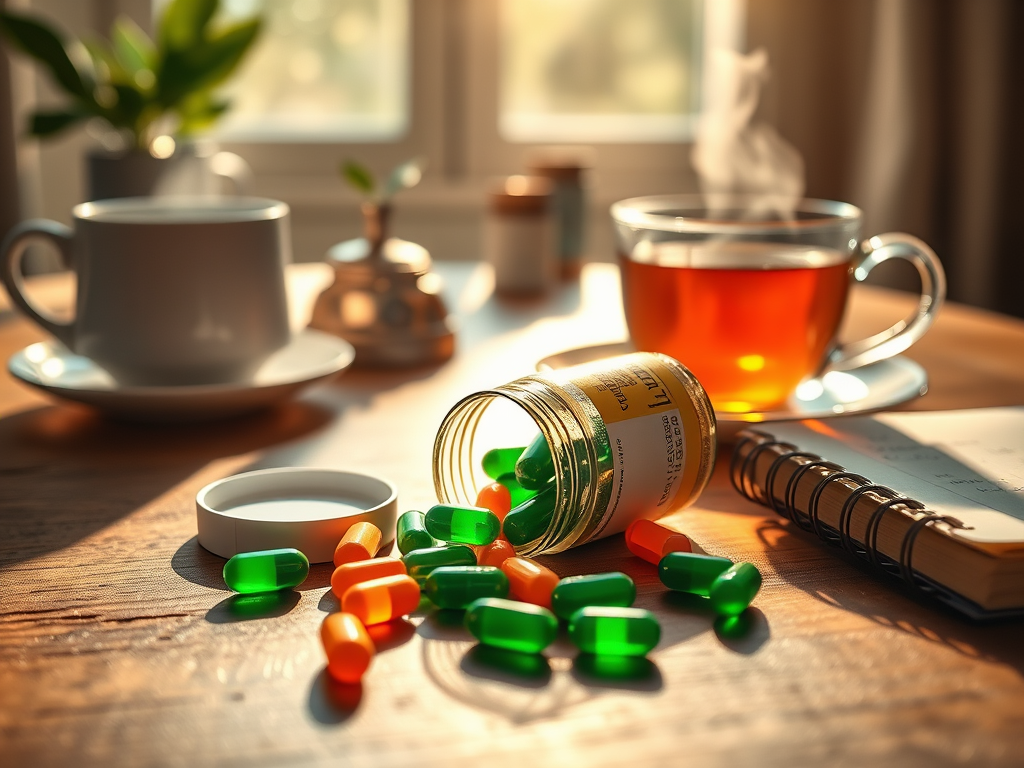
During my stressful exam days, my mother used to give me pills every morning. These were supplements made from Spirulina, a blue-green algae touted as a “superfood” that provides various nutrients in one go. Although I wasn’t convinced of its benefits back then, and mostly grumbled while taking them, I now find myself diligently taking several pills of nutritional supplements every morning and evening. Some I take for their known benefits, while others I consume with vague expectations.
One such supplement with vague expectations is vitamin C. I take it primarily because it tastes good. Despite well-known short-term effects, evidence for its long-term benefits is lacking. Thus, there is insufficient justification for taking it daily. Vitamin C acts as an antioxidant, readily oxidizing in the presence of reactive oxygen species, thereby protecting other molecules from oxidation. However, it’s uncertain if it functions this way within the complex environment of the body.
One example I use to explain redox reactions to college freshmen is the excessive intake of vitamin C during alcohol consumption. Hangovers occur when the liver’s enzyme capacity to convert ethanol to acetic acid is exceeded by alcohol intake. Ethanol is first oxidized to acetaldehyde, a toxic compound. If acetaldehyde is not further oxidized to acetic acid and eventually broken down into carbon dioxide (CO₂) and water, it can accumulate and cause harmful effects, including tissue damage and alcohol-related toxicity. Vitamin C, with its high reducing power, can inhibit ethanol oxidation, promote its rapid excretion, and protect the body from acetaldehyde. Some clinical studies suggest these effects, but limited research and challenges in understanding the molecular mechanisms make it difficult to confirm. Nonetheless, vitamin C is one of the few molecules that are relatively safe even in high doses, so taking it with vague expectations isn’t particularly harmful unless excessively overconsumed.
Vitamin C deficiency leads to scurvy. Vitamin C supports white blood cell activity, playing a crucial role in immune function, and reacts with reactive oxygen species in the stomach lining and lungs to prevent cell membrane damage. The daily recommended intake is 90 mg for adult men and 75 mg for adult women. While some believe vitamin C prevents colds, studies show it doesn’t reduce incidence rates but can shorten the duration of colds if taken in high doses (200 mg daily) after onset. Its antioxidant properties also suggest cardiovascular benefits by preventing LDL cholesterol oxidation, a primary cause of plaque formation in blood vessels leading to cardiovascular diseases. However, reviews of multiple studies indicate that while vitamin C deficiency is harmful, its preventive capabilities against cardiovascular diseases are not well-established.
Recently, high-dose vitamin C has been reconsidered as an adjunct in cancer therapy. Although still debated, recent research elucidating mechanisms by which high-dose vitamin C induces cancer cell death offers hope for its inclusion in cancer treatment regimens. However, high doses exceeding daily recommendations can cause adverse effects like kidney stones and gastrointestinal issues, necessitating medical supervision.
Consuming energy drinks or tonics often results in bright yellow urine, attributable to riboflavin (vitamin B2) fluorescence. Vitamin B complex, a group of water-soluble molecules involved in metabolism, is thought to alleviate fatigue and boost energy. However, while deficiency causes problems, excess intake does not necessarily enhance vitality.
There are over 20 molecules classified as vitamin B, but supplements typically contain eight (B1, 2, 3, 5, 6, 7, 9, 12). Since fruits, vegetables, nuts, and grains usually provide sufficient amounts, additional supplementation is generally unnecessary. However, vitamin B9 (folic acid) is crucial for preventing neural tube defects in fetuses, making it essential for women of childbearing age and pregnant women to supplement from one month before conception through the first three months of pregnancy.
Excessive vitamin B complex intake can have serious side effects. Vitamin B3 (niacin), involved in HDL cholesterol formation, was once prescribed with laropiprant for cardiovascular disease treatment. However, recent studies concluded this combination doesn’t improve cardiovascular outcomes and can cause adverse effects like diabetes, gastrointestinal disorders, musculoskeletal issues, skin conditions, infections, and bleeding. Excessive intake from energy drinks is also linked to acute liver disease.
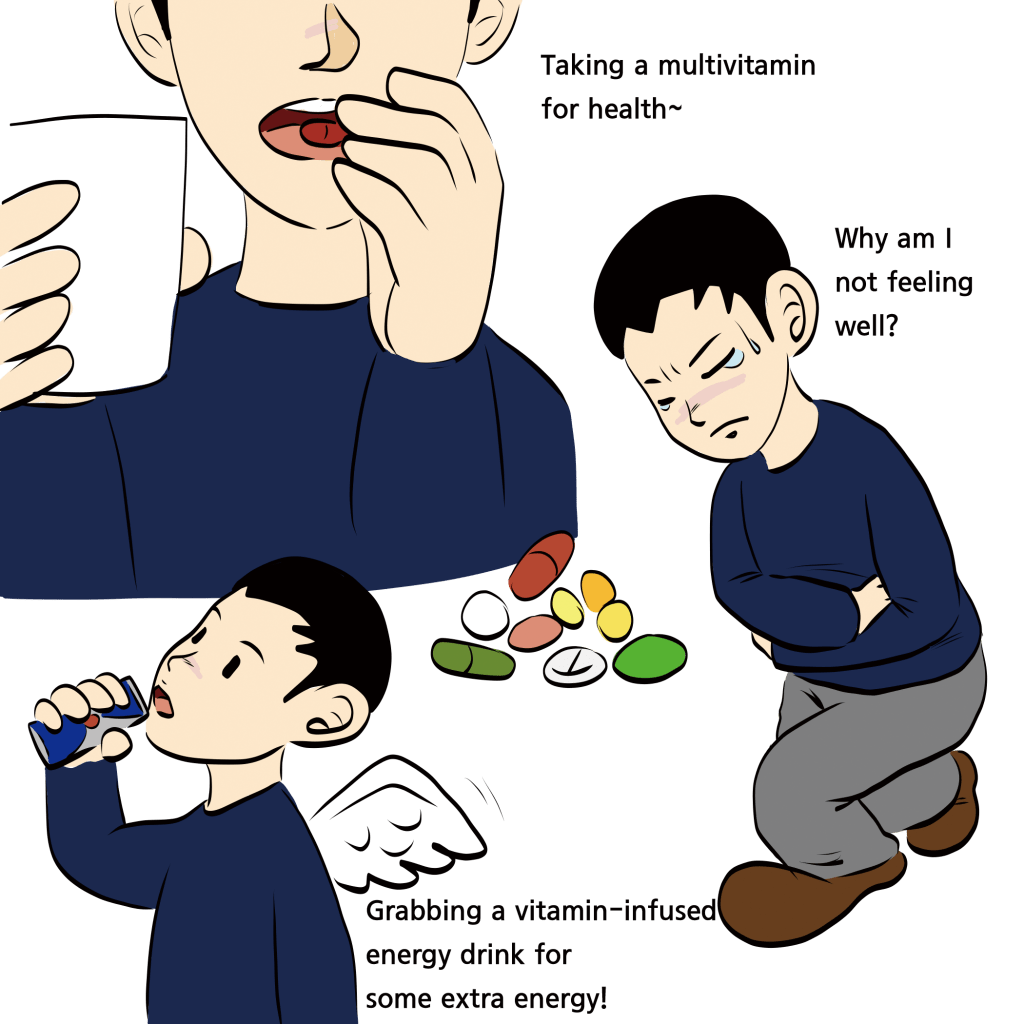
Even water-soluble vitamins, expelled through urine, can cause unexpected problems if overconsumed. Greater caution is needed with fat-soluble vitamins (A, D, E, K), which are used as drugs for conditions ranging from cancer to skin diseases. These vitamins, administered in high doses during treatment, require careful monitoring for side effects.
Vitamin A is prescribed for acne and neuroblastoma (a pediatric cancer). Patients taking high doses often experience skin-related side effects, necessitating careful management. Many people, after blood tests, find they are deficient in vitamin D. This hydrophobic molecule, synthesized in the body, is formed when 7-dehydrocholesterol, a cholesterol precursor, is exposed to ultraviolet light. Daily exposure to sunlight for about 20 minutes is required, but indoor lifestyles often lead to deficiencies. This fat-soluble vitamin, responsible for transporting calcium to the bone marrow, remains in the body for extended periods (half-life in blood is 15 days), necessitating caution with high doses and medical consultation when taken as a supplement. The daily recommended intake is 0.015 mg for adults under 70 and 0.020 mg for those over 70. Its primary benefit is preventing osteoporosis, although it doesn’t prevent fractures in children. For adults, calcium and vitamin D together help prevent osteoporosis fractures and promote longevity. However, for older adults, this combination increases the risk of kidney stones. Claims about cardiovascular and cancer prevention remain unproven.
Essential vitamins are crucial for survival, but overconsumption does not necessarily yield additional benefits. Since vitamins play roles in numerous bodily reactions, their supplementation should be approached cautiously. Instead of relying solely on scientific articles, I recommend consulting a primary care physician, getting appropriate tests, and following medical advice for supplement intake. Just because supplements are easily accessible doesn’t mean they are safe.
Summary
Vitamins are essential for health, but their overconsumption can lead to unexpected risks, particularly with excessive supplementation. Water-soluble vitamins, though expelled through urine, can still pose problems in high doses, while fat-soluble vitamins (A, D, E, K) are more concerning as they accumulate in the body, necessitating careful monitoring.
Vitamin C:
- Acts as an antioxidant, potentially reducing cellular damage and shortening cold durations.
- Its benefits in cardiovascular health and cancer therapy remain inconclusive, and excessive intake can cause adverse effects like kidney stones and gastrointestinal issues.
Vitamin B Complex:
- Generally unnecessary with a balanced diet, but folic acid (B9) is essential for pregnant women to prevent fetal neural tube defects.
- Excessive intake offers no added vitality and can lead to serious side effects, such as diabetes or gastrointestinal issues, particularly with high doses of niacin (B3).
Vitamin A:
- Prescribed for conditions like acne and neuroblastoma, often causing skin-related side effects.
- Requires careful management during high-dose treatments to avoid toxicity.
Vitamin D:
- Commonly deficient due to lack of sunlight exposure, as it is synthesized in the body via UV light.
- Essential for calcium transport and osteoporosis prevention, but overuse in older adults increases the risk of kidney stones.
- Its benefits in cardiovascular health and cancer prevention are not proven.
Key Takeaways:
- While vitamins are vital for survival, over-supplementation does not provide additional benefits and can cause harm.
- Supplementation should be based on medical advice and blood test results, not self-prescription or unverified claims.
- The accessibility of supplements doesn’t guarantee their safety; cautious and informed use is
References
1. Lim et al. BMJ Nutr Prev Health. 2018; 1, 17
2. Susick & Zanobi, Clin Pharmacol Ther. 1987, 41, 502
3. https://ods.od.nih.gov/factsheets/VitaminC-Consumer/
4. Hemilä & Chalker, Cochrane Database Syst. Rev. 2013, 1, CD000980
5. Lusis, Nature, 2000, 407, 233
6. Moser & Chun, Int J Mol Sci. 2016, 17, 1328
7. Ngo et al. Nat. Rev. Cancer, 2019, 19, 271
8. De‐Regil et al. Cochrane Database Syst. Rev. 2010, 10, CD007950
9. The HPS2-THRIVE Collaborative Group, N. Engl. J. Med. 2014, 371, 203
10. Harb et al. BMJ Case Rep. 2016, bcr-2016-216612
11. https://ods.od.nih.gov/factsheets/VitaminD-HealthProfessional/
12. Winzenberg et al. Cochrane Database Syst. Rev. 2010, 10, CD00694
13. Weaver et al. Osteoporos Int., 2016, 27, 367
14. Bjelakovic et al. Cochrane Database Syst. Rev. 2014, 1, CD007470
 Leo & Leah
Leave a comment