
Hugh Kim & Soo Yeon Chae
In the United States, proteogenomics has emerged as a core technology in next-generation precision medicine, which is defined as prevention and treatment strategies tailored to individual patient differences. Among the diseases where precision medicine holds the most promise, cancer stands at the forefront.
Cancer remains one of the most complex challenges in medical science, with significant variability in causes, progression, and treatment outcomes across individuals. This makes it an ideal area for the application of personalized, precision-based approaches. Clinical institutions across the country consistently emphasize that early detection is the most critical factor in successful cancer treatment.
In the U.S., various screening programs aim to detect cancer at earlier, more treatable stages. However, despite advances in diagnostic technologies, a substantial number of cancers are still first diagnosed at more advanced stages, particularly in individuals who fall outside recommended screening guidelines. This highlights the urgent need for more sensitive and personalized early detection strategies.
As proteogenomics continues to evolve, it holds the potential to transform early cancer detection by identifying molecular-level changes before clinical symptoms appear, ultimately improving survival rates and reducing the burden of late-stage diagnoses.
Cancer treatment in the U.S. typically involves three main modalities: surgery, chemotherapy, and radiation therapy. While each plays a vital role, chemotherapy remains the most prolonged form of treatment for many patients. Chemotherapy uses cytotoxic drugs—chemical agents designed to kill rapidly dividing cells—to target and destroy cancer cells.
Unlike the benign connotation of “chemicals” in everyday life, the “chemicals” used in chemotherapy are, indeed, toxic. These agents work by damaging cells during the division process, effectively killing cells that proliferate uncontrollably—primarily cancer cells. However, because these drugs do not distinguish between cancerous and healthy fast-growing cells, they also harm normal tissues such as blood cells, hair follicles, mucosal cells, and reproductive cells. This is why patients undergoing chemotherapy often experience side effects like hair loss, immune suppression, and anemia. These traditional chemotherapy agents are known as first-generation cytotoxic drugs, and although they’ve been in clinical use since the mid-20th century, they remain diverse and well-studied.
In the early 2000s, second-generation targeted therapies were developed to reduce collateral damage to healthy tissue. These drugs are designed to inhibit specific proteins or molecular targets that are unique to cancer cells. While they represent a significant advancement, targeted therapies are limited by tumor heterogeneity—differences among patients and within tumors. Not all patients express the target proteins, and tumors can develop resistance or bypass mechanisms, reducing long-term effectiveness.
More recently, third-generation immunotherapies have gained attention. These therapies harness the patient’s immune system by blocking immune evasion pathways or by labeling cancer cells with antibodies to stimulate an immune attack. Because they bolster natural immune defenses, immunotherapies are associated with fewer side effects and were initially believed to be a major breakthrough. However, clinical results remain variable, and their overall impact has not yet met early expectations.
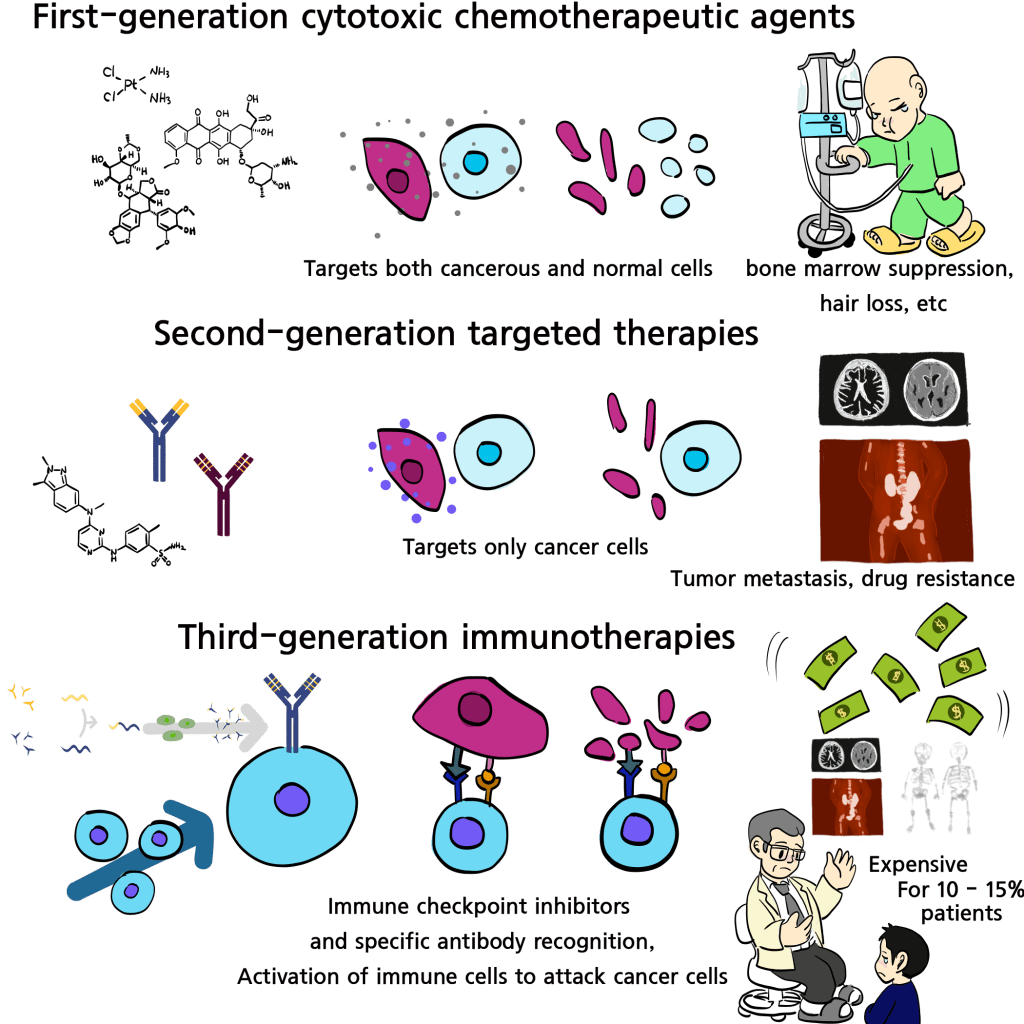
Despite the evolution from cytotoxic drugs to targeted and immunotherapies, cancer remains the second leading cause of death in the U.S. The varying responses to these therapies are largely attributed to differences in patient genetics and the tumor microenvironment.
This is where proteogenomics—the integration of genomic and proteomic data—becomes pivotal. All current cancer treatments, whether first-, second-, or third-generation, are largely based on shared characteristics of cancer cells. Yet patient outcomes differ significantly due to individual molecular profiles. Chemotherapy drugs, for example, can elicit very different responses or resistance depending on a patient’s unique tumor biology.
Proteogenomic analysis of tumor tissues enables researchers to understand these variations. By studying the molecular environment and signaling pathways in cancer tissues, clinicians can better stratify patients and tailor therapies accordingly. When proteogenomic profiles are statistically correlated with clinical outcomes, they offer critical insights for developing effective, personalized treatment strategies.
In the U.S., precision oncology efforts increasingly focus on building large-scale databases that link tumor proteogenomic data with patient outcomes. For example, multi-institutional research initiatives are analyzing tumor and matched normal tissues to identify genetic mutations and corresponding proteomic pathways that define cancer subtypes. These subtypes often predict prognosis and treatment response, paving the way for subtype-specific therapies.
Tissue samples for proteogenomic analysis are typically collected during surgical procedures, ideally before any chemotherapy or radiation therapy is administered. It’s critical to freeze these samples immediately to preserve the integrity of the molecular signaling environment. Even short-term exposure to drugs or environmental stress can alter signaling pathways, compromising data accuracy.
Effective proteogenomic research requires seamless collaboration between oncologists, surgeons, and laboratory scientists. As analytical technologies advance, it may soon be possible to perform detailed proteogenomic profiling from smaller biopsy samples or even from blood or bone marrow specimens—without relying solely on surgical resections.
Ultimately, the integration of proteogenomics into clinical workflows is expected to refine cancer classification, improve early detection, and enable truly personalized treatment plans that reduce toxicity and improve survival outcomes.
Please visit the Hugh Kim Research Group homepage.
References
1. Dong-Gi Mun et al., Cancer Cell 2019, 35, 111-124
2. Chae S.Y. et al., iScience 2021, 24, 102325
3. Bruce A. Chabner et al., Nat. Rev. Cancer 2005, 5, 65-72
4. OpenAI. (2025). ChatGPT (April 21 version) [Large language model]. https://chat.openai.com/
 Leo & Leah
Leave a comment