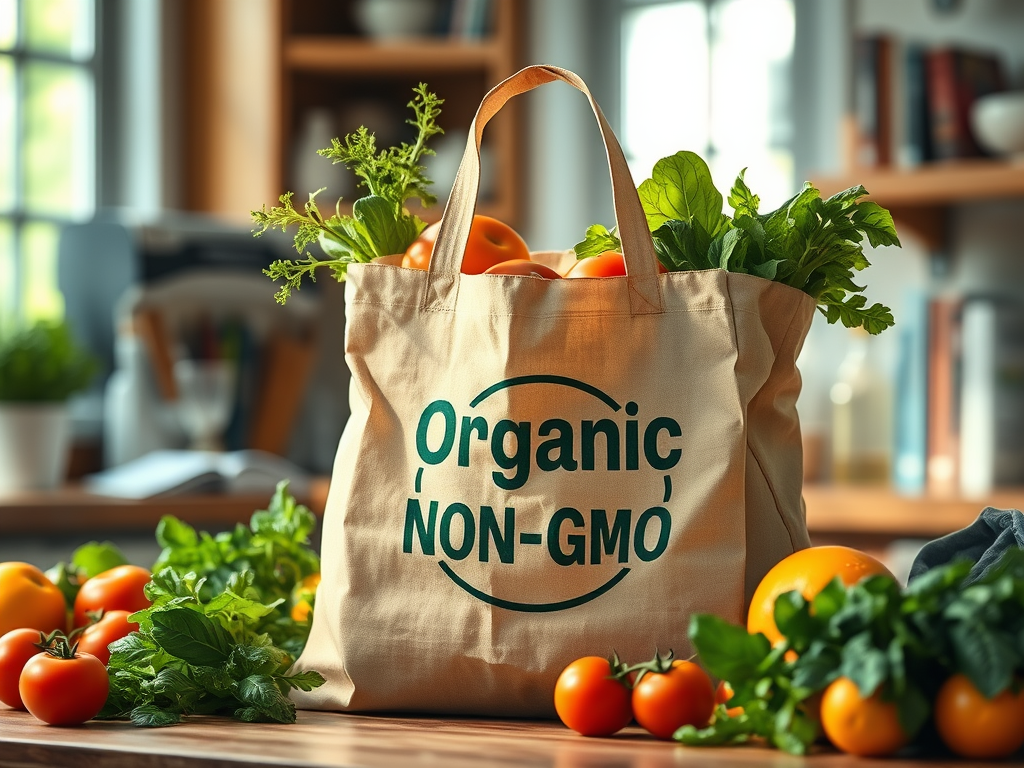
When my wife came home from the local grocery store, I noticed that many of the bags were labeled “Organic” and “Non-GMO.” This brought back memories from over 20 years ago when I was an undergraduate student in California. The upscale grocery store near my first apartment always seemed busy, and I often saw the word “Organics” printed everywhere. At that time, immersed in organic chemistry quizzes, exams, and lab reports, I was clueless about its meaning. I naively thought it referred to organic matter (carbon-based functional compounds) and was put off by the high prices, leading me to shop at a nearby large supermarket instead. About a year later, during an analytical chemistry lab, I learned that “Organics” referred to organic produce, grown without synthetic pesticides or fertilizers. Interestingly, trace amounts of pesticides were still detected in organic oranges. As I now stocked our fridge with the organic food my wife bought, I reflected on how much my daily diet had changed to include many organic items.
My lab researches disease models and therapies for personalized medicine using various cell types. Consequently, we are classified as a genetically modified organism (GMO) lab and must undergo annual LMO (Living Modified Organism) safety training and testing, which is quite challenging. LMO stands for “Living Modified Organism,” a subset of GMO, which means genetically modified organism. GMOs are defined by law as crops that have been genetically altered to possess specific traits through artificial gene separation or recombination.
GMO technology involves inserting genes that express desirable traits (e.g., pest resistance) from microbes or other organisms into crop cells, resulting in genetically modified plants. This differs from traditional breeding techniques like hybridization, grafting, or cuttings, used to select for desired traits. Examples of GMO crops include non-rotting tomatoes and pest-resistant corn. Globally, GMO technology is extensively applied to commercial crops like soybeans and corn. In U. S., the Food and Drug Administration (FDA), along with USDA and EPA, has approved over 190 GMO items, including soybeans, corn, cotton, canola, sugar beets, potatoes, papaya, and apples, following stringent safety evaluations for toxicity, allergens, and nutritional impact. Despite the rigorous evaluations, there remains a significant distrust.
A common concern is whether genes in genetically modified foods can alter human DNA. The consensus is that consumed food genes do not cause such genetic modifications in our cells. However, there is still debate over whether unknown proteins or peptides in these foods might cause long-term issues like inflammation, potentially leading to mutations and disease.
While the likelihood of diseases from GMO foods is extremely low, there have been isolated incidents, such as the production ban on Brazilian nut gene-enhanced soybeans due to allergic reactions. Nevertheless, stringent allergy testing is now standard for GMO foods. Approved GMO crops are safe for consumption, having passed rigorous evaluations.
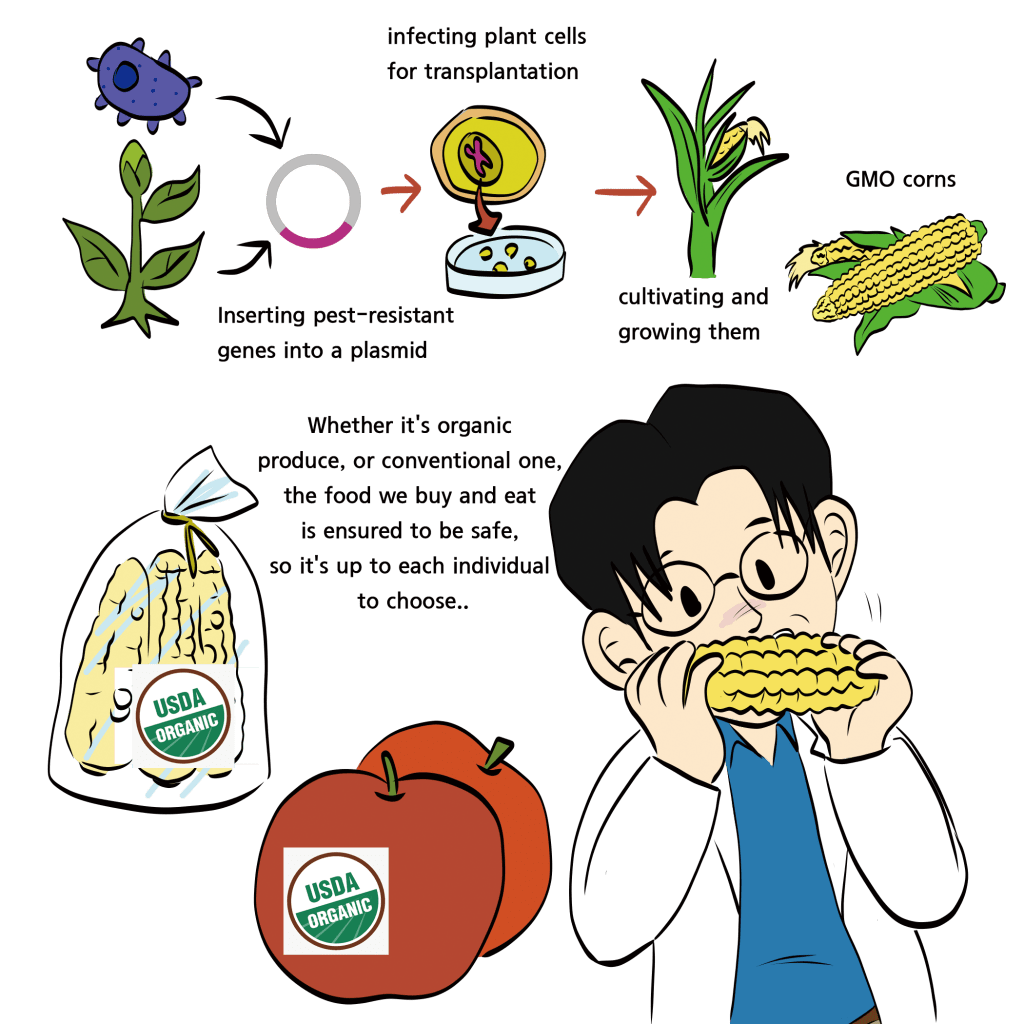
Even with a one-in-a-million chance of adverse effects, perception of risk can vary greatly. For instance, the probability of being struck by lightning in the US in 2024 was approximately one in 1600,000. However, unlike lightning, which doesn’t strike daily, we eat food every day. Routine, uneventful occurrences rarely make the news, but sensational, rare incidents do, which can skew public perception towards conservative, protective behaviors. This perception gap is a niche that the organic food industry has effectively filled.
The debate over organic food has been long-standing. Despite higher prices, the market for organic products continues to grow, signifying public acceptance. This growth may be attributed to the perception that natural equals safe and artificial equals dangerous—a mindset stemming from the unintended side effects of rapid technological advancement post-Industrial Revolution.
Synthetic fertilizer production and chemical pesticides like insecticides and herbicides have enabled stable food supplies, allowing humanity to surpass the population limits predicted by Malthus. However, significant environmental and health side effects from these technologies have fostered a cautious approach to human intervention, leading to a preference for “natural” solutions and a longing for a simpler past.
Educational and environmental influences further this narrative. My school education framed pesticides as harmful toxins accumulating in the body. Some advocates I met in the U.S. supported organic farming to protect nature from large-scale commercial agriculture’s destructive effects. Extended discussions with environmental chemistry experts reinforced these views.
Are organic foods truly safer and better for the environment? Some studies report higher nutrient content in organic produce, such as up to 50% more antioxidants like vitamin C, attributed to the plants’ self-defense mechanisms. However, other studies find no significant nutritional advantage in organic foods. The primary benefit of organic foods may lie in reduced exposure to toxins and pesticide residues, which likely drives market growth, especially among parents seeking safer food options for their children.
Heavy metals like lead and cadmium, and persistent organic pollutants like polychlorinated biphenyls (PCBs), pose long-term health risks. Organic crops generally contain lower levels of these toxins, but conventionally grown produce is also strictly regulated, maintaining safety within acceptable limits.
In the U.S., organic certification is regulated by the USDA National Organic Program (NOP), which requires crops to be grown without synthetic pesticides or fertilizers for a designated period (three years). However, residual synthetic chemicals in the soil may still be present in organic produce. Additionally, the use of manure and compost as fertilizers can introduce issues, such as contamination with pathogenic bacteria like E. coli, which caused the large-scale outbreak in Germany in 2011 linked to organic sprouts and cucumbers. Such incidents are rare, just as the risks from synthetic chemicals in conventional produce are minimal. Ultimately, individuals must navigate these risks based on their comfort levels.
Organic farming represents a “back-to-basics” approach, contrasting with the Agricultural Revolution’s efficiency-driven advancements. This traditional farming method requires more labor and land but less synthetic input and electricity. Short-term environmental benefits appear promising, but long-term impacts are less clear.
Discussing disease statistics has led me to view them as relevant only to third parties. For instance, even if a disease occurs in one out of a million people, it becomes highly significant if it affects me or a loved one. Similarly, a single protein rarely serves just one function in a cell. Analyzing the interactions of plant proteins and their impacts on human cellular networks is complex and may take decades to fully understand. Thus, while the likelihood of harmful effects from trace toxins in non-organic foods is low, opting for organic or non-GMO products might offer peace of mind, even at a higher cost. However, such personal choices should not be imposed on others.
Summary
- GMOs are created by inserting specific genes to enhance traits like pest resistance, differing from traditional breeding methods.
- While over 190 GMO crops have been approved in the U.S. after rigorous safety testing, public distrust remains due to concerns about unknown long-term effects.
- Although organic foods may contain fewer pesticide residues, both organic and conventional produce are regulated for safety, making personal choice the key factor in food selection.
References
- https://www.mfds.go.kr/webzine/201611/02.jsp
- Nordlee et al. N. Engl. J. Med., 1996, 334. 688
- Bauman, (2017) Retrotopia, Wiley
- Duarte et al. Acta Hortic., 2012, 933, 601
- Brandt et al. CRC Crit. Rev. Plant Sci., 2011, 30, 177
- Hunter et al. Crit Rev. Food Sci. Nutr., 2011, 51, 571
- Asami et al. J. Agric. Food Chem., 2003, 51, 1237
- Barański et al. Br. J. Nutr., 2014, 112, 794
- Smith-Spangler et al. Ann. Intern. Med., 2012, 157, 348
- Hoefkens et al. Food Chem. Toxicol., 2010, 48, 3058
- Dangour et al. Am. J. Clin. Nutr., 2009, 90, 680
- EHEC O104:H4 Outbreak in Germany, 2011
- Buckholz et al. N. Engl. J. Med., 365, 1763
- https://www.youtube.com/watch?v=8PmM6SUn7Es
 Leo & Leah
Leave a comment