
Hugh Kim & Dongjoon Im
From the perspective of the amyloid hypothesis, the approach to alleviating disease involves delaying the formation of pathogenic aggregates of amyloid-beta peptides as much as possible. If completely removing amyloid-beta peptides from the body or reverting already formed pathogenic aggregates to a non-toxic state is challenging, the focus is on early-stage interventions to minimize symptom manifestation. However, since amyloid-beta peptide aggregation involves multiple stages, various strategies continue to be explored.
Amyloid-beta peptides are formed when enzymes act on amyloid precursor proteins. One approach is to inhibit the enzymes’ action or activate enzyme functions that prevent the formation of pathogenic aggregates (for details on the aggregation process of amyloid-beta peptides, refer to Chapter 6). Another method is targeting amyloid-beta peptides for removal, such as through antibody therapies. Additionally, the process of forming aggregation nuclei—the starting point of pathogenic aggregates from amyloid-beta peptide monomers—can be slowed. Similarly, the process by which additional amyloid-beta peptides bind to these nuclei and grow can also be delayed.
Our lab (Hugh Kim group @ Korea University, Seoul, Korea) has also conducted and reported research on various methods to inhibit the formation of pathogenic aggregates of amyloid-beta peptides.
First, it is possible to use small molecule compounds to inhibit the formation of pathogenic aggregates. For example, cucurbit[7]uril (CB[7]), a pumpkin-shaped cyclic compound, binds to the phenylalanine residues in amyloid-beta peptides, which play a critical role in aggregation. This binding disrupts the hydrophobic interactions necessary for forming pathogenic aggregates. Cell experiments have confirmed that using cucurbituril molecules to inhibit the transition of amyloid-beta peptides into pathogenic aggregates significantly reduces their toxicity.
In addition to using molecular structures to inhibit aggregation, similar effects were observed with biomolecules naturally present in the body. Human serum albumin (HSA), a protein that transports various substances and maintains homeostasis in the body, was found to bind to amyloid-beta peptides. This binding prevents the formation of pathogenic aggregates. Like the results with cucurbituril molecules, adding albumin proteins reduced amyloid-beta peptide-induced cellular toxicity.
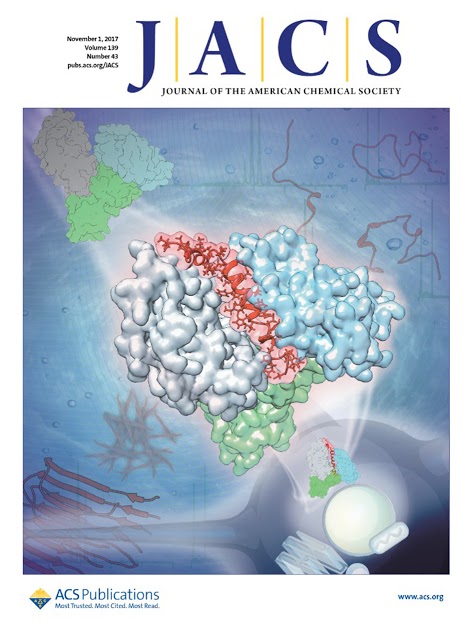
Recently, beyond small molecules and naturally occurring proteins, success has been achieved in using amyloid-beta peptide variants to inhibit pathogenic aggregation. Specific amino acid positions critical to aggregation were identified, and variants were designed to alter the interaction tendencies of these proteins. The resulting variants not only lost the original amyloid-beta peptides’ propensity to form pathogenic aggregates but also influenced surrounding wild-type amyloid-beta peptides, reducing cellular toxicity.
We are actively utilizing computational simulations and AI systems to predict protein-protein interactions, moving beyond the design of two-dimensional (based on the secuence of peptides) aggregation-inhibiting peptides to predict three-dimensional complex structures between proteins and peptides. This technology aims to inhibit the aggregation of amyloid-beta. Additionally, ongoing research focuses on designing more efficient antibodies and incorporating functionalities to degrade amyloid-beta aggregates or halt the aggregation process.
These research outcomes were made possible by modern scientific advancements, such as observing protein aggregation through electron microscopy and various spectroscopic techniques, cultivating cells to evaluate the toxicity of pathogenic aggregates, and elucidating protein-level interactions using mass spectrometry and synchrotron radiation facilities. Even though there are unknowns about certain diseases, scientists will continue to propose potential treatments based on established knowledge.
As the saying goes, “Prevention is the best cure.” If diseases can be prevented, this is far more valuable than developing treatments. As mentioned earlier, much remains unknown about the onset and progression of neurodegenerative diseases such as Alzheimer’s. Despite this, clinical institutions commonly recommend preventative measures: (1) treating hypertension, diabetes, heart disease, and hyperlipidemia; (2) avoiding excessive drinking, smoking, and drug abuse; (3) addressing depression; (4) maintaining enjoyable hobbies; (5) avoiding head injuries; (6) engaging in regular, appropriate exercise; and (7) maintaining a healthy diet. In short, maintaining healthy lifestyle habits, as commonly understood, may help prevent neurodegenerative diseases. Unfortunately, this is likely the extent of what can be done in daily life. While misfortune can strike in an instant, our efforts to prevent such events are often limited. Nevertheless, consistently engaging in these limited actions is a vital force in protecting the lives we have been given.
Through this series, we aimed to share valuable information, though it may have fallen short. However, one key takeaway is that all aspects of our daily lives are products of science, and countless scientists are continuously working to protect these aspects. In these times, when the value of ordinary life feels more precious than ever, we hope this series has provided an opportunity to appreciate the science behind it. Wishing you continued health and well-being.
Please visit the Hugh Kim Research Group homepage.
References
- Hardy, J. A. and Higgins, G. A. Science 1992, 256(5054), 184-185
- Cummings, J. L., et al. Alzheimers Res Ther 2014, 6(4), 1-7
- Sevigny, J., et al. Nature 2016, 537(7618), 50-56
- Logovinsky, V., et al. Alzheimers Res Ther 2016, 8(1), 1-10; Irizarry, M. C., et al. Alzheimers Dement 2016, 12, P352-P353
- Golde, T. E. J Neurochem 2006, 99(3), 689-707
- Lee, H. H., et al. Angew Chem Int Ed 2014, 126(29), 7591-7595
- Choi, T. S., et al. J Am Chem Soc 2017, 139(43), 15437-15445
- Im, D., et al. J Am Chem Soc 2022, 144(4), 1603-1611
- Im, D. et al. JACS Au 2023, 3, 4, 1065-1075
 Leo & Leah
Leave a comment