Hugh Kim & Dongjoon Im
The Amyloid Cascade Hypothesis is the most prominent theory explaining the causes of Alzheimer’s disease (AD). If you are familiar with this hypothesis or have heard of the term, you likely have a significant interest in medical science, particularly in dementia.
Although first proposed about 30 years ago, this hypothesis remains a subject of intense academic debate. It describes a series of cascading events initiated by amyloid-beta (Aβ) peptides that ultimately lead to Alzheimer’s disease. According to this hypothesis, the influence of Aβ peptides on AD development is described in two major ways:
Role of Aβ Peptides in Alzheimer’s Disease
- Inducing Neuronal Death:
Research over the last three decades indicates that toxic aggregates formed during amyloid plaque formation can clearly cause neuronal death. However, unlike earlier assumptions, the damage to neurons appears to be caused more by other toxic aggregates rather than the amyloid plaques themselves. - Promoting Neurofibrillary Tangles (NFTs):
Aβ peptides disrupt calcium ion balance within and outside cells, increasing intracellular calcium ion levels. This imbalance triggers hyperphosphorylation of the tau protein, a microtubule-associated protein within neurons.
Recent studies propose multiple pathways through which Aβ peptides influence tau proteins. While the precise relationship remains unclear, prevailing opinions suggest that Aβ peptides facilitate the transformation of tau from its normal structure to a toxic form. In turn, toxic tau proteins amplify the neurotoxicity of Aβ peptides. Furthermore, pathogenic Aβ and tau proteins can propagate like prions, converting nearby normal Aβ and tau proteins into their toxic forms (see Protein Misfolding, Amyloid Aggregation, and Disease for details).
Tau Protein and Its Function in the Body
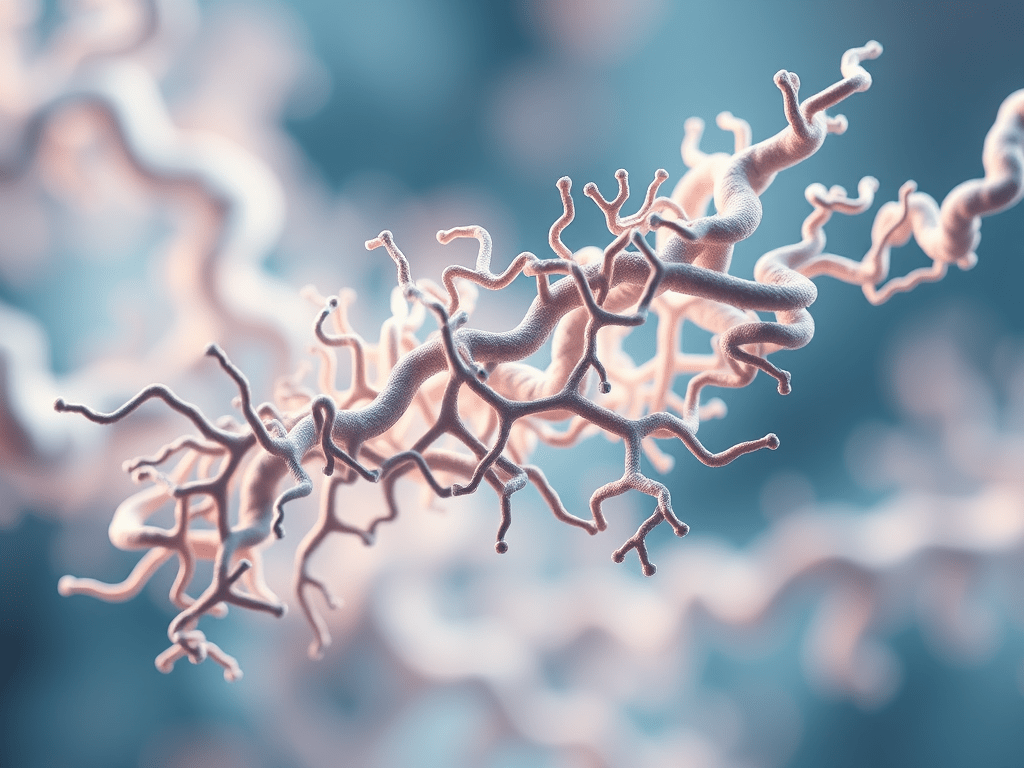
Tau proteins are widely recognized as a core component of neurofibrillary tangles, one of the hallmark features of Alzheimer’s disease. However, tau proteins are implicated not just in AD but in other neurodegenerative diseases as well, such as Pick’s disease (PiD) and corticobasal degeneration (CBD).
So, what exactly does tau do in our bodies, and why is it associated with so many neurological diseases?
Functions of Tau Protein:
Tau is a microtubule-associated protein (MAP) found in neurons, where it performs several critical functions:
- Stabilizing Microtubules: Microtubules form part of the cell’s internal skeleton, providing structural integrity. Tau primarily exists in axons but is also present at low levels in the soma and dendrites.
- Regulating Organelles and Actin Interaction: Tau helps organelles move along microtubules and influences the interaction between actin (a muscle protein) and microtubules.
- Ensuring Proper Dendritic Spine Function: Tau supports the normal operation of dendritic spines, where neurotransmitter receptors are located.
Historically, tau was believed to strictly stabilize microtubules, but recent findings suggest it prevents excessive stabilization, allowing microtubules to perform their dynamic cellular functions properly.

Tau Hyperphosphorylation and Its Consequences
Tau protein has over 80 phosphorylation sites. Phosphorylation is a common post-translational modification (PTM) in which a phosphate group is added to a protein, altering its structure and function.
- Positive Role: Under appropriate conditions, phosphorylation can act as a regulatory signal, enabling specific functions.
- Negative Role: Excessive phosphorylation disrupts tau’s normal functions, leading to microtubule destabilization and tau aggregation, which are hallmarks of diseases like Alzheimer’s.
Unlike Aβ peptides, whose physiological roles remain poorly understood, tau proteins are vital for various cellular processes. Consequently, genetic mutations in tau can directly lead to neurodegenerative diseases. For instance, in autosomal dominant frontotemporal dementia, children of affected individuals have a 50% chance of developing the disease.
Advances in Tau Research
Recent breakthroughs in structural biology, particularly through cryo-electron microscopy (cryo-EM), have provided high-resolution insights into the interactions between tau proteins and microtubules. These advancements include:
- Determining the exact structure of tau protein fibers from patients with different types of dementia.
- Mapping post-translational modifications unique to each disease type.
These discoveries underscore the complexity of tau biology and highlight the limitations of therapies that aim to simply eliminate or deactivate tau proteins. Instead, tackling tau-related diseases like Alzheimer’s requires a molecular-level understanding of cellular processes, supported by advanced technologies.
Please visit the Hugh Kim Research Group homepage.
References
- Hardy, J. A. and Higgins, G. A. Science 1992, 256(5054), 184-186
- Hampel, H., et al. Mol Psychiatry 2021, 1-23
- Bloom, G. S. JAMA Neurol 2014, 71(4), 505-508
- Dickson, D. W., et al. J Mol Neurosci 2011, 45(3), 384-389
- Baas, P. W., and Qiang, L. Trends Cell Biol 2019, 29(6), 452-461
- Hoover, B. R., et al. Neuron 2010, 68(6), 1067-1081
- Wang, J. Z. and Liu, F. Prog Neurobiol 2008, 85(2), 148-175
- Kellogg, E. H., et al. Science 2018, 360(6394), 1242-1246
- Fitzpatrick, A. W., et al. Nature 2017, 547(7662), 185-190
- Arakhamia, T., et al. Cell 2020, 180(4), 633-644
 Leo & Leah
Leave a comment