The COVID-19 pandemic was caused by a mutated coronavirus. Coronaviruses are responsible for 10 – 15% of common cold cases, but the pandemic-causing SARS-CoV-2 is a zoonotic virus believed to have originated from bats, passed through an intermediate host to humans. Evidence includes the 96% genetic similarity between bat coronavirus (RaTG13) and SARS-CoV-2.
While COVID-19 originated from wildlife contact, pandemics have also arisen from contact with domesticated animals. Notable examples include avian influenza and swine flu. Avian influenza, an infectious respiratory disease in birds, can also infect humans. Since its first reported human infection in Shanghai in 2013, avian influenza has annually caused outbreaks from fall to spring with a high fatality rate of 25%. Migratory birds spread avian influenza globally, but humans are primarily infected through domesticated birds like chickens and ducks.
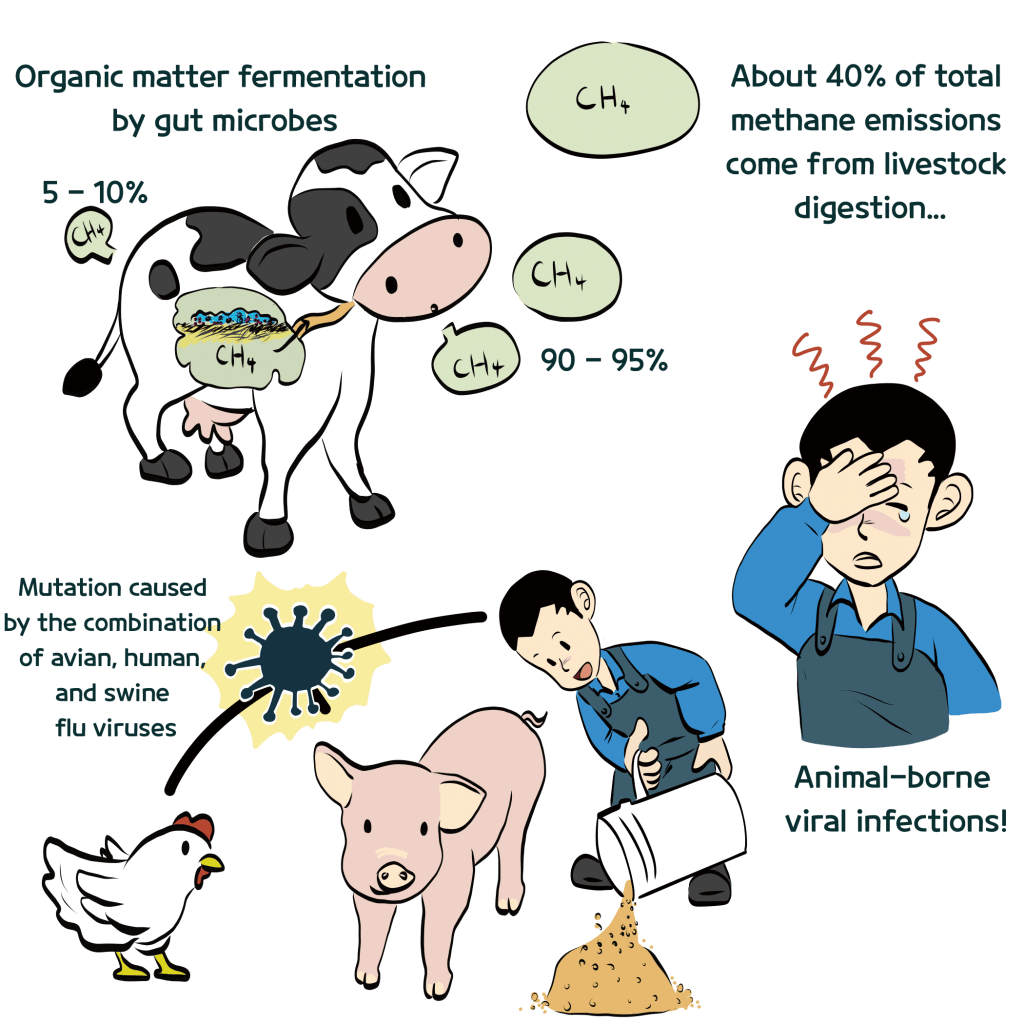
The 2009 swine flu pandemic, linked to pigs, originated in Mexico and southern California before rapidly spreading worldwide. Epidemiological investigations suggest that swine flu resulted from the combination of human and pig influenza viruses. Swine influenza, resulting from the mutation of avian and human influenza viruses in pigs, can infect humans, as seen with the 2009 pandemic.
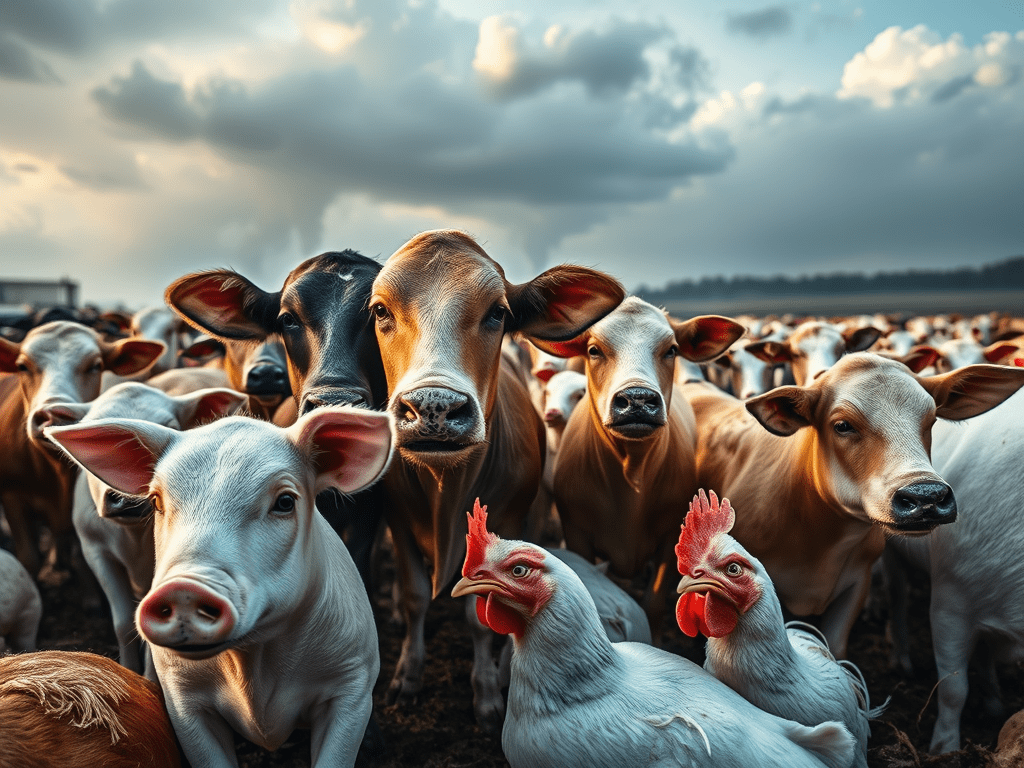
Domesticated animals raised for human use are called livestock, primarily reared for meat. While products like eggs and milk are also obtained, meat is the primary goal. Meat provides a crucial protein source, but commercial livestock farming poses significant challenges.
Commercial livestock farming offers a steady protein supply but also impacts the environment due to dense breeding conditions and excessive expansion. During my graduate studies in atmospheric chemistry, I discovered that livestock farming is a major methane emitter (about 40% of total emissions), contributing to greenhouse gases along with CO2 and N2O. Herbivorous animals like cows, goats, and sheep produce methane during digestion. Microorganisms in their stomachs break down organic matter, generating hydrogen, CO2, and methane. These ruminants, which regurgitate and chew their cud to digest tough plant fibers, rely on microorganisms to ferment and break down cellulose and fibers. This process produces intestinal methane gas, primarily expelled through belching. Interestingly, these microorganisms are a significant protein source for ruminants, providing 50 – 100% of their daily protein needs, which we then consume as meat.
CO2, accounting for over 80% of greenhouse gases (as of 2018), mainly comes from fossil fuel consumption. Mitigating global warming requires reducing fossil fuel use and developing renewable energy. However, methane’s greenhouse effect is ~25 times stronger than CO2, making the 400 million tons of methane emitted annually from livestock farming a significant concern.
Humans have consumed meat for over 3.4 million years. While there are varied opinions, it is generally accepted that hunting and meat consumption have driven human evolution. Meat consumption has been vital for survival and development, with current demand continually rising. Various studies and media highlight the environmental and health issues arising from excessive meat production and consumption.
Commercial livestock farming has reached its limits due to land and water consumption, greenhouse gas emissions, and disease risks. However, giving up a stable protein source is not feasible. Efforts are underway to produce protein through alternative methods, such as edible insects, plant-based meat substitutes, and cultured meat from animal muscle cells. These initiatives, while promising, are not yet widely accepted as protein sources. However, significant progress has been made, particularly in plant-based meat substitutes. The next post, the final part of the science of proteins, will explore alternative meat options.
References
- Wacharapluesadee et al. Nat. Commun. 2021, 12, 972
- https://www.cdc.gov/flu/avianflu
- Sun et al. PNAS 2020, 117, 17204-17210
- https://www.epa.gov/ghgemissions
- Bohnert et al. 2002. J. Anim. Sci. 80:1629-1637
- Ben-Dor et al. Am. J. Phys. Anthropol., 2021 https://doi.org/10.1002/ajpa.24247
- Shahbandeh, Global production of meat 2016-2019, Statista, 2020
- Thompson et al. J. Hum. Evol., 2015, 86, 112-135
- Post et al. Scie. Total Environ., 2020, 737, 139702
- Robinson et al. “Global Livestock Production Systems.” (2011)
- Opio et al. Greenhouse gas emissions from ruminant supply chains–A global life cycle assessment. Food and agriculture organization of the United Nations, 2013
- “Explained” The Future of Meat (Netflix Episode 2019)
 Leo & Leah
Leave a comment