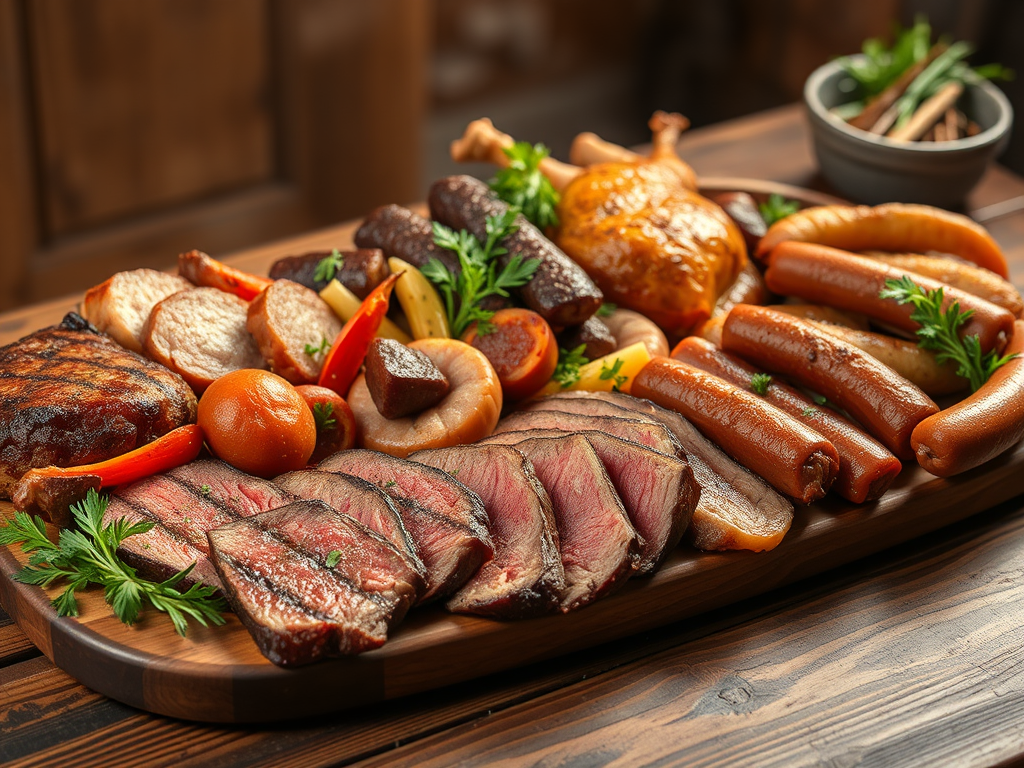
During social gatherings centered around meals, meat is almost always the most popular choice. While the type of meat varied depending on the budget and occasion, most people prefer eating meat as the main focus rather than dishes with only small portions of it.
Meat is an essential source of protein. In discussing water in the previous post, we likened our cells to cities where proteins, lipids, and carbohydrates interact while being covered in water. Here, proteins play the most crucial role, akin to the inhabitants of these cities. Proteins are fundamental to cells, maintaining vital functions through transport, catalysis, and signal transmission both inside and outside the cell. Additionally, they form muscle fibers, tendons, and connective tissues, providing structure to the body. Proteins are composed of amino acids, which can be synthesized within our bodies but are primarily obtained through the digestion of dietary proteins.
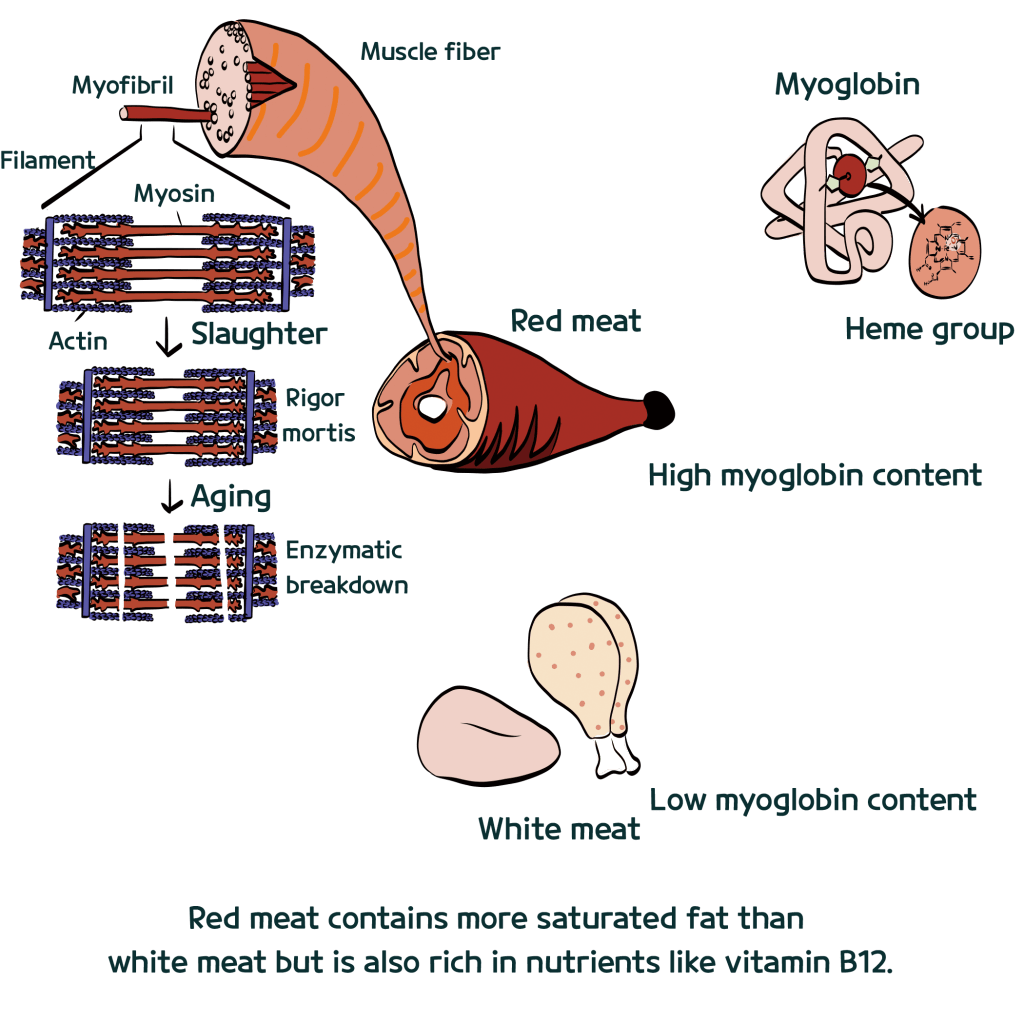
Meat is derived from animal muscle tissue. Animal muscles consist of approximately 75% water, 20% protein, and 5% fats and carbohydrates. The primary proteins in muscle are actin and myosin filaments arranged in muscle fiber bundles. These fibers contract and relax, enabling muscle movement. This process requires energy, generated when glucose undergoes a combustion reaction with oxygen, producing carbon dioxide, water, and releasing energy. This energy is used to synthesize ATP molecules, which provide energy within muscle cells. Oxygen is supplied through the bloodstream.
When an animal dies, blood circulation stops, and the slaughtering process removes blood from the carcass, cutting off the oxygen supply to the muscle cells. Without oxygen, muscle cells break down glycogen, a glucose polymer stored in tissues, to generate ATP, producing lactic acid as a byproduct. This occurs during intense exercise when oxygen delivery to muscles is insufficient, providing energy for activity and resulting in lactic acid buildup, causing soreness often referred to as “muscle stiffness.” In deceased animals, lactic acid accumulates, lowering pH and releasing calcium ions, causing actin and myosin to form actomyosin, leading to muscle contraction and stiffness. Stiff muscles are tough to eat, but aging the meat allows proteolytic enzymes to break down the rigid muscles, turning them into the tender meat we enjoy. The acidic conditions due to lactic acid also contribute to the development of the meat’s characteristic flavor during the aging process.
Cooking meat with fire triggers complex reactions. Heat breaks down proteins, altering their structure and causing them to coagulate. Water between muscle proteins is expelled, making the meat easier to chew and giving it a firm texture due to reduced moisture. Carbohydrates in the muscle break down into sugars under heat, which then react with amino acids in the Maillard reaction, turning the meat a desirable brown color. This reaction requires high temperatures above 150°C, which is why boiling meat at 100°C does not produce browning.
While searing the surface of a steak to “seal in the juices” is a common belief, it does not create an impermeable barrier to water. However, ensuring the interior retains enough moisture while the exterior crisps can result in a pleasant contrast of textures. Cooking meat generates various volatile compounds, including hydrocarbons, alcohols, aldehydes, ketones, carboxylic acids, esters, lactones, furans, pyrans, pyrroles, pyrazines, pyridines, and phenols. For beef, cooking can produce around 1,000 different compounds. However, cooking meat can also form carcinogenic substances like polycyclic aromatic hydrocarbons (PAHs) from fat reactions and heterocyclic amines (HCAs) from seasonings. Thus, it is crucial to avoid excessive charring to minimize the formation of these harmful compounds.
Meat is categorized into red and white meat based on color. Red meat comes from muscles used for prolonged activities, rich in myoglobin, a protein storing oxygen for continuous energy supply. Like hemoglobin in red blood cells, myoglobin binds oxygen, providing it to muscle cells for energy production. It contains a heme group with an iron ion, which gives it a bright red color when bound to oxygen. This is why muscles from animals like cows, which stand and move for long periods, are red due to high myoglobin content.
White meat comes from muscles with high fiber content, used for sudden activities like escaping from danger. These muscles primarily derive energy from glycogen within the muscle, containing less myoglobin and appearing white. Chicken breast, pork, and veal are examples of white meat. Fish muscles are also mostly white because the buoyancy of water negates the need for muscles to support body weight. However, the muscles around fins and tails, used for continuous movement, are red. Large swimming fish like tuna have more red muscle content than other fish.
There is a perception that red meat is less healthy than white meat. It is true that red meat has higher saturated fat content, while white meat often contains more unsaturated fats like omega-3 fatty acids. However, red meat also provides more vitamins and minerals like vitamin B12. Health concerns related to red meat (cancer, cardiovascular diseases) might be due to unbalanced diets with excessive meat consumption. The lower saturated fat content in white meat is not significantly different from red meat. Health issues from overconsuming red meat will not improve simply by switching to white meat without limiting overall meat intake.
References
1. https://www.exploratorium.edu/cooking/meat/meat-science.html
2. Paredi et al. J Proteomics 2012, 75, 4275-4289
3. Matarneh et al. Chapter 5 – The Conversion of Muscle to Meat, Lawrie´s Meat Science (Eighth Edition), Woodhead Publishing, 2017, 159-185
4. Kosowska et al. Food Sci. Technol. 2017, 37, 1-7
5. Brunning, C&En, 2015, 93, ISSUE 28
6. Ukundanet al. Fishery Technology, 1979, 16, 77-82
7. https://www.nutritionadvance.com/healthy-foods/red-vs-white-meat/
8. Bergeron et al. Am J Clin Nutr , 110, 2019, 24–33
 Leo & Leah
Leave a comment