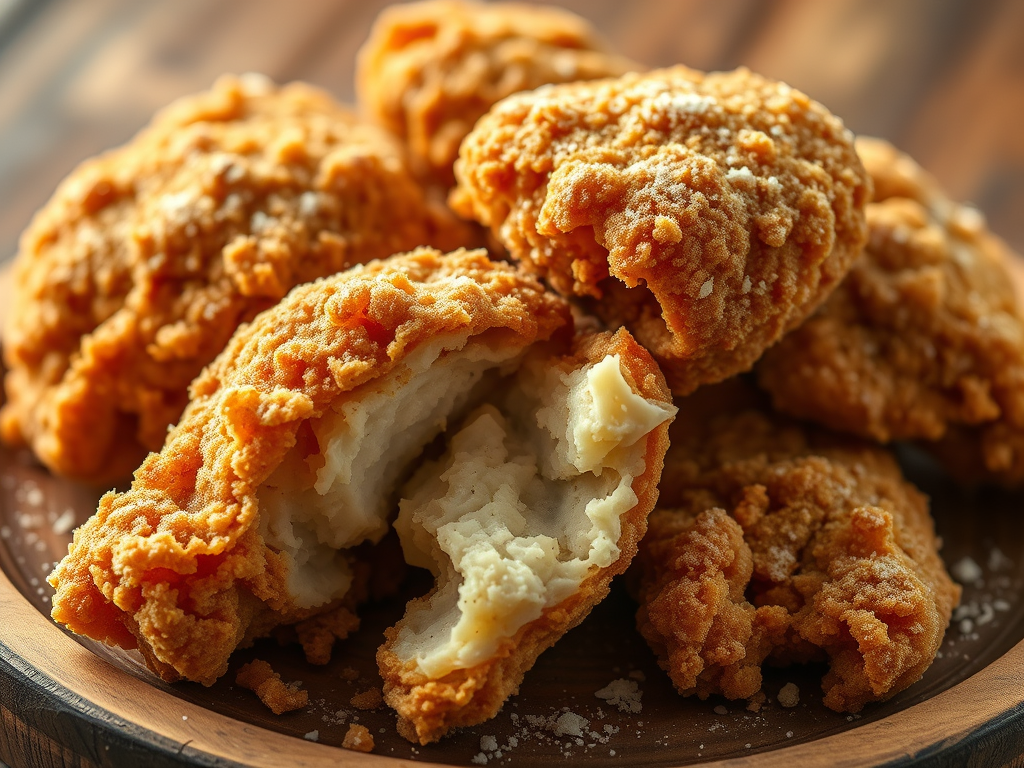
Since turning eighteen, my body shape remained relatively unchanged until I was thirty-two. My weight stayed consistent, and I considered myself relatively healthy. However, after joining the institute in Korea as a faculty member at thirty-three, I gained 10 lbs of fat in just six months. While I blamed my busy schedule for disrupting my exercise routine, the real culprit was the fried chicken I indulged in at least twice a week.
The perfect harmony of crispy batter, savory and spicy seasonings, and the greasy, juicy meat of Korean fried chicken is undeniably irresistible, especially on weekend evenings. Packed with carbohydrates, fats, proteins, sodium chloride, capsaicin, and a mix of flavorful seasonings, it triggers a burst of endorphins and dopamine, delivering an instant sense of satisfaction. While grilled and steamed chicken have gained popularity as healthier alternatives, nothing has managed to topple fried chicken from its long-standing throne as the ultimate comfort food.
Frying involves cooking food in hot oil. Various foods can be fried, from meats like chicken, beef, pork, to seafood like shrimp and squid, and even vegetables like peppers and onions. However, the common denominator is the batter made from flour. Seasoned flour batter coats the food, which is then cooked in hot oil. Essentially, cooking flour batter in hot oil through frying, stir-frying, or sautéing follows the same mechanism.
When hot oil contacts the batter, the water content evaporates first. At around 200°F (150°C), the batter starts to float due to the density change from water evaporation. The ideal frying temperature is around 335 – 355°F (170-180°C), where water evaporation is rapid, and the Maillard reaction between amino acids and carbohydrates creates the characteristic golden color and flavor of fried foods.
As hot oil penetrates the gaps left by evaporated water in the flour batter, it transfers heat to cook the food inside. The dried batter surface prevents oil absorption and water loss from the food, ensuring a crispy texture. Lower oil temperatures result in less effective water evaporation, leading to soggy textures. Conversely, temperatures above 390°F (200°C) cause rapid dehydration, burning the batter before the food cooks.
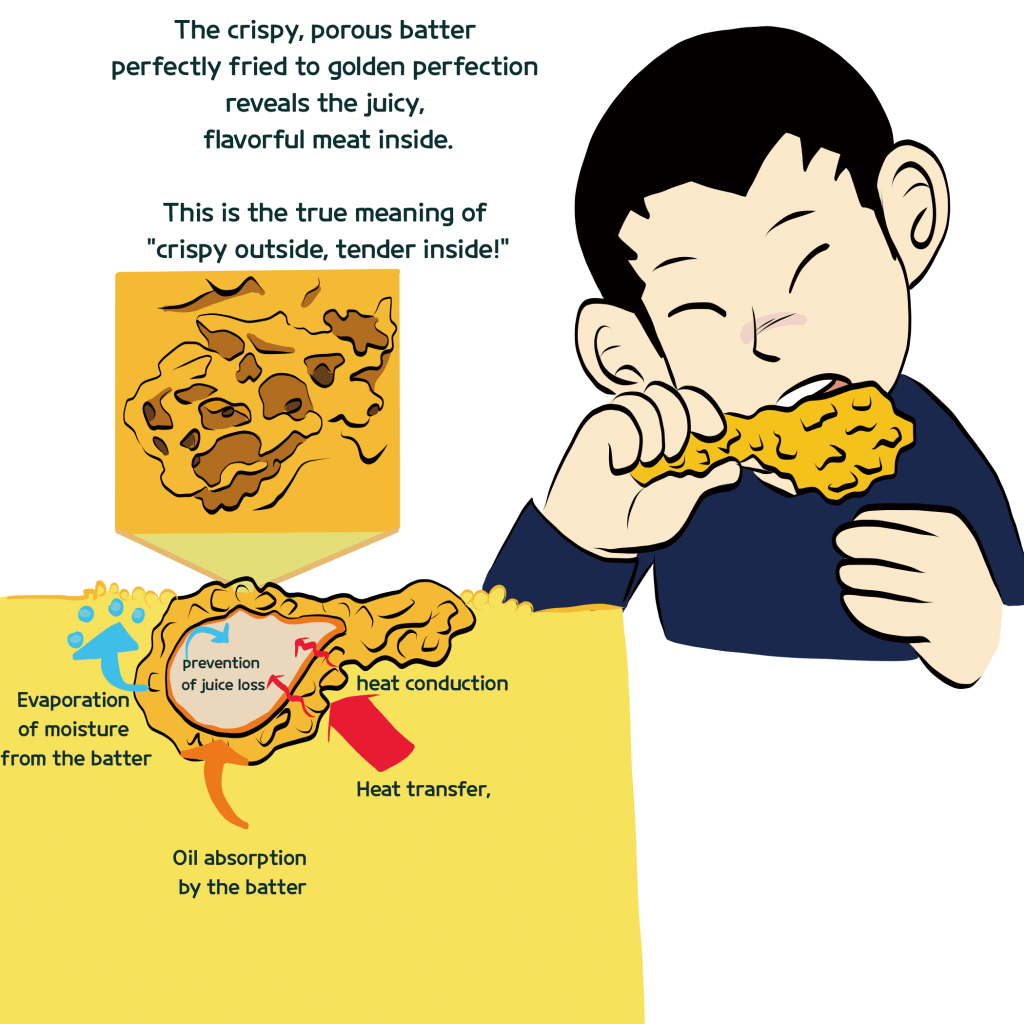
Creating a crispy texture relies on forming tiny air pockets in the batter. During fermentation, CO2 expands rapidly in hot oil, creating micro-spaces in the batter. These spaces allow more efficient water evaporation. The gluten network helps the batter maintain its shape after frying, while the porous structure and low moisture content create a “crispy” batter. Using carbonated water or mixing ethanol with the batter enhances crispiness by promoting water evaporation. Well-fried batter, under a microscope, reveals a porous structure with many micro-spaces.
Frying a flour batter allows for long-term storage in sealed packages without spoilage, and adding hot water rehydrates the batter quickly, restoring its elasticity. This property led to the invention of instant ramen by Taiwanese-Japanese inventor Momofuku Ando in 1958. Since the 1990s, air-dried noodles have been developed as a healthier alternative to fried ramen. While fried noodles contain a moisture content of 3-6%, air-dried noodles have about 10% moisture, with fewer micro-spaces due to less water evaporation. As a result, air-dried noodles take longer to cook and have a firmer texture compared to fried ramen.
Cooking rice-based ingredients in hot oil yields unique textures different from flour batter. Thin, crispy coatings with chewy rice inside offer a distinct experience. Rice flour dough, unlike flour batter, forms a structure through starch gelatinization, requiring hot water for preparation. Frying or stir-frying rice or rice cakes results in Maillard reactions on the surface and water evaporation. Unlike flour batter, rice dough has fewer micro-spaces, which makes oil penetration more difficult, resulting in thin, crispy coatings and thick, chewy interiors. This unique texture combination is exemplified in dishes like fried rice or rice cakes topped with spicy chili sauce or savory soy sauce.
The chemical composition differences between rice and wheat-based carbohydrate sources, interacting with other nutrients like proteins, fats, and water, have diversified our diet with a variety of flavorful and essential foods. The type of oil used in frying also affects texture and flavor, which will be discussed later.
References
1. Koerten, Deep frying : from mechanisms to product quality, Wageningen University, ISBN 9789462576476–119
2. Lumanlan et al. Food Sci. Tech., 2020, 55, 1661-1670
3. Thanatuksorn et al. J Sci Food Agric. 2007, 87, 2648-2656
4. Carvalho and Ruiz-Carrascal, Food Sci Technol. 2018, 55, 2068–2078
5. https://ifood.tv/dough/rice-dough/about
6. Nakamura and Ohtsubo, Biosci Biotechnol Biochem. 2010, 74, 2484-2489
 Leo & Leah
Leave a comment