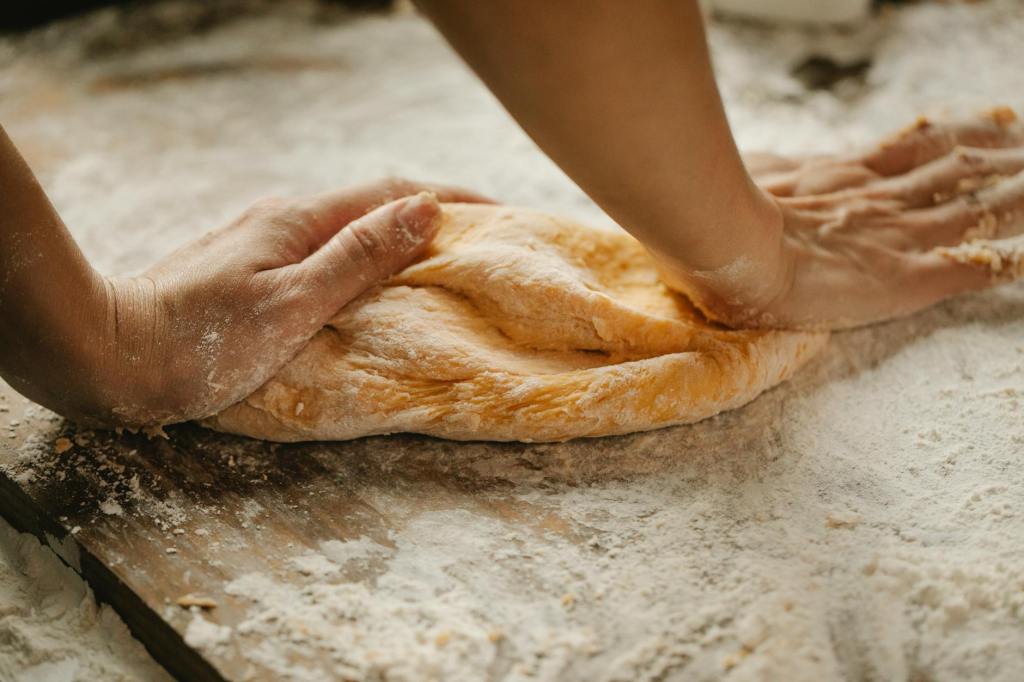
“What should we eat?” is a question we ask at least once or twice a day. Our basic diet consists of consuming carbohydrates from cooked rice, bread, or noodles and other nutrients from various seasoned side dishes. Our meal choices mostly revolve around selecting side dishes. However, when we crave something different, we can have other carbohydrate options. For instance, when ordering from a Chinese fast food restaurant, you can pick your protein side dishes and enjoy them with fried rice or chow mein.
Among common carbohydrate sources, both noodles and bread are made by kneading wheat flour, which is derived from grinding wheat grains. Rice, on the other hand, comes from grains that can be de-husked due to their relative hardness, making them suitable for cooking and consumption as rice. However, wheat grains are too soft to be de-husked, so they are milled to produce flour, which is then used in cooking.
The most common dishes made from flour are noodles and bread. When flour is mixed with water to create dough, it can be shaped as desired. Adding water allows the incorporation of water-soluble sugars to enhance carbohydrate content, and mixing in eggs, milk, or vegetable oils can form emulsions within the dough, creating unique textures. The dough’s hydrophilic and hydrophobic properties allow for the addition of various seasonings and aromatic substances, resulting in a wide variety of bread and noodles to choose from.
The secret to the unique properties of wheat-based dough lies in gluten, a complex of proteins composed of glutenin and gliadin. Glutenin is a water-soluble protein with long chain structures, forming a mesh-like network through disulfide bonds between cysteine amino acid side chains. Gliadin, a highly hydrophobic protein, is tightly coiled and forms strong structures through internal disulfide bonds.
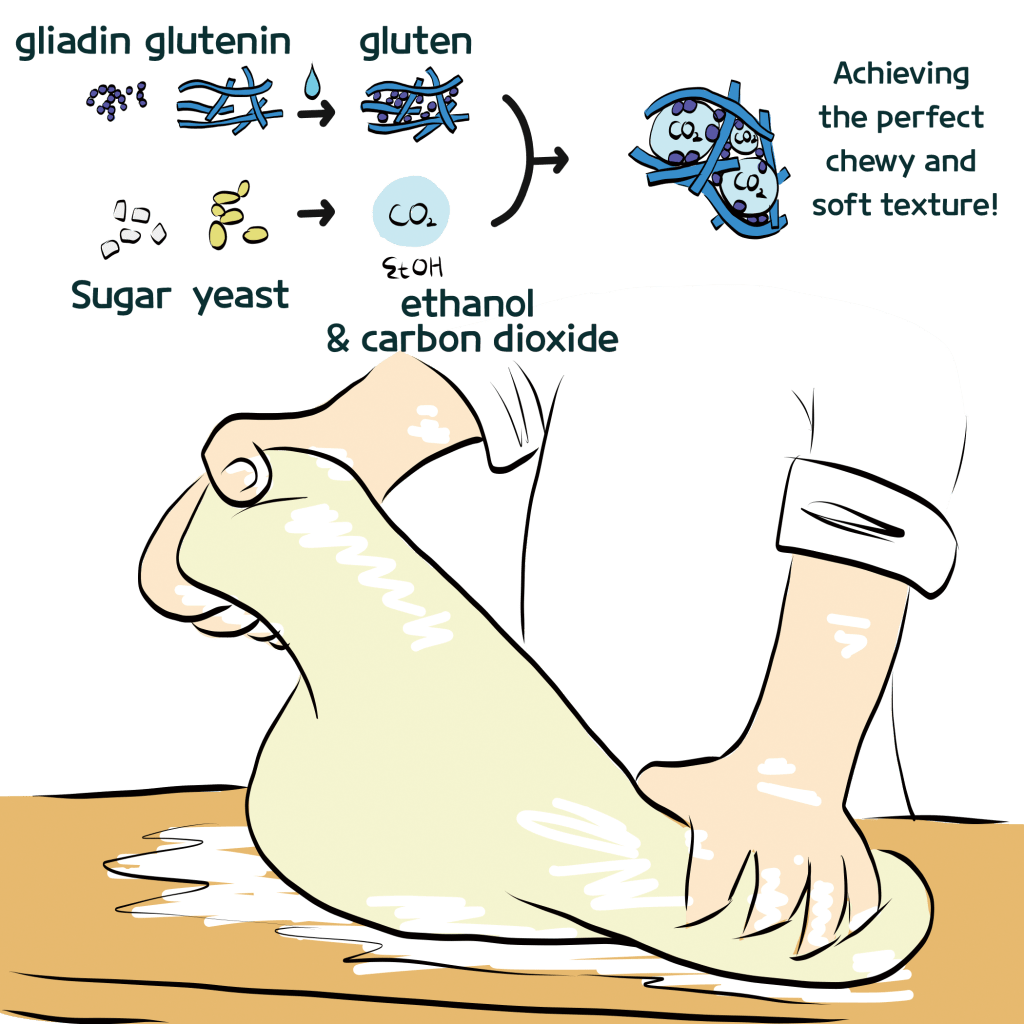
When wheat flour is mixed with water, hydrophobic and tightly coiled gliadin molecules weave into the glutenin network, forming gluten. Hydrogen bonds and disulfide bonds between glutenin and gliadin create a stable complex, giving the dough its elastic and sticky properties. Kneading the dough provides the energy needed for more gluten to form, resulting in a chewier dough. Gluten also helps the dough retain its shape during baking or drying, maintaining the shape of bread, cookies, or noodles.
While elasticity alone would make noodles or bread tough, a balance of chewiness and softness results in soft, fluffy bread or noodles. Yeast, commonly used in dough, plays a key role in achieving this texture. The yeast used in dough is the same species, Saccharomyces cerevisiae, used in brewing beer or wine.
Yeast ferments sugars in the dough, producing carbon dioxide and ethanol, causing the dough to rise. The interesting part is that the carbon dioxide gets trapped within the gluten network, remaining in the dough. During the drying process for noodles or baking for bread, ethanol and a large amount of water evaporate, and the expanding carbon dioxide causes the dough to puff up, resulting in a soft yet chewy texture. Various compounds produced during yeast fermentation also add unique aromas. If the fermentation process is undesirable, baking powder can be used as an alternative. Baking powder, a mixture of sodium bicarbonate (baking soda, NaHCO3) and tartaric acid, reacts in water to release carbon dioxide, mimicking the effect of yeast fermentation.
Fermentation technology and the action of gluten have elevated wheat, as a grain, to a position where it competes with rice, which is already a staple in our diet. However, recently, gluten has become a target of avoidance. Some people have difficulty digesting wheat-based foods, and in many cases, this is due to gluten sensitivity. It is said that between 0.5 – 6% of the population in various regions (~1% in the USA) suffer from gluten sensitivity. Among these, the most severe case is celiac disease. Celiac disease is considered a genetic disorder. It is a type of allergic reaction to gluten, caused by an excessive immune response to a specific substance, which leads to an autoimmune disease.
As explained previously on nutrients and the digestive system, proteins are broken down into amino acids or short peptides for absorption. Glutenin, with its broad structure, is easily broken down because digestive enzymes can easily access it. However, the hydrophobic and dense gliadin makes it difficult for enzymes to break it down into amino acids or small peptides. As a result, it breaks down into relatively large oligopeptides, which are recognized by the immune system as foreign invaders in the small intestine, triggering an immune response. This immune reaction leads to inflammation in the small intestine, and if gluten intake continues repeatedly, the inflammation persists, damaging the villi. Since the villi in the small intestine play a crucial role in nutrient absorption, damage to the villi can affect nutrient absorption, potentially leading to malnutrition.
People who are sensitive to gluten, like those with celiac disease, must avoid foods containing gluten. A recent report suggested that the symptoms of gluten sensitivity might not be caused by gluten itself, but no other evidence has yet emerged to support alternative causes for these symptoms.
References
1. Ribeiro et al. J. Proteome Res. 2013, 12, 4702–4716
2. Feng et al. Grain Oil Sci. Tech., 2020, 3, 29-37
3. Hill ChemMatters Feb. 2012, 9-11
4. Stern et al. Eur J Gastroenterol Hepatol. 2001, 13, 741–747
5. Nanayakkaran et al. J. Clin. Nutr. 2013, 98, 1123-1135
6. Beaudoin and Willoughby, J Nutr Health Food Eng. 2014, 1, 229-232
7. Gweon et al. Korean J Gastroenterol. 2013, 61, 338-342
8. Ham et al. Intest Res. 2017, 15, 540-542
9. Khamsi, Scientific American 310, 2, 30-32
 Leo & Leah
Leave a comment