
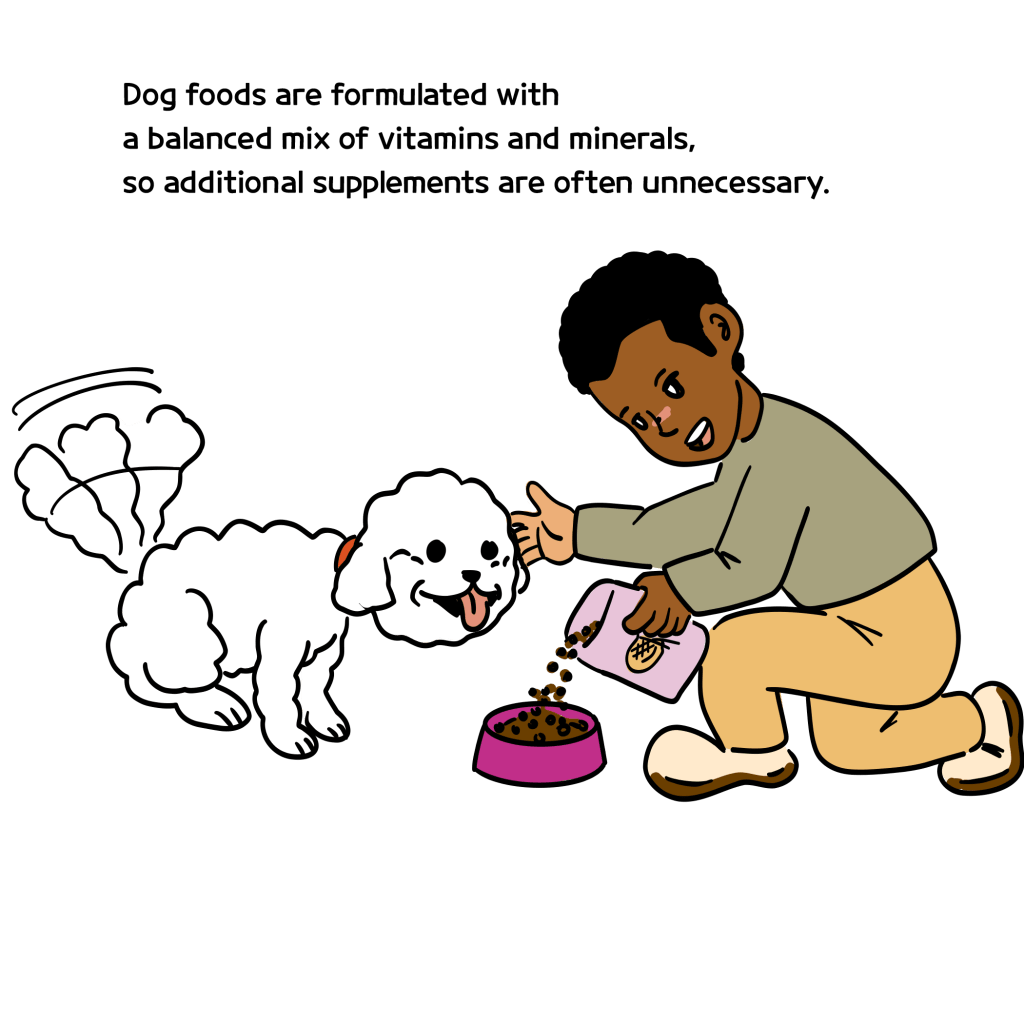
Most dog foods are formulated with a balanced mix of vitamins and minerals, so additional supplements are often unnecessary. However, certain health conditions may require extra supplementation. It’s recommended to consult a veterinarian before giving any supplements to your dog.
• Multivitamins
– Used to maintain overall health in dogs, these supplements typically include various vitamins and minerals such as vitamins A, B, C, D, and E.
• Omega-3 Fatty Acids
– Beneficial for skin and coat health, joint health, and heart health. Salmon oil or fish oil is commonly used for this purpose.
• Joint Supplements
– Containing glucosamine, chondroitin, and MSM, these supplements support joint health and are especially useful for older dogs or those with joint issues.
• Biotin
– Supports skin and coat health, and can be helpful for dogs experiencing excessive shedding.
• L-Carnitine
– Assists in weight management and supports energy metabolism, making it beneficial for overweight dogs
• Calcium Supplements
– Help support bone health and are recommended for growing puppies or dogs with insufficient calcium intake.
• Probiotics
– Support digestive health, help with allergy responses, and boost the immune system.
– As an omnivorous animal, dogs greatly benefit from probiotics, making them an important supplement.
– Since probiotics are often not included in dog food, providing them can improve appearance and overall health.
References
- Case, The Dog: Its Behavior, Nutrition, and Health, 3rd ed., 2023, WIley
- Gates, Dogology: The Weird and Wonderful Science of Dogs, 2021, Quadrille
- Lewis, Biology of Dogs: From Gonads Through Guts to Ganglia, 2021, Dogwise
- Folge, New Encyclopedia of Dog, 2000, DK
 Leo & Leah
Leave a comment