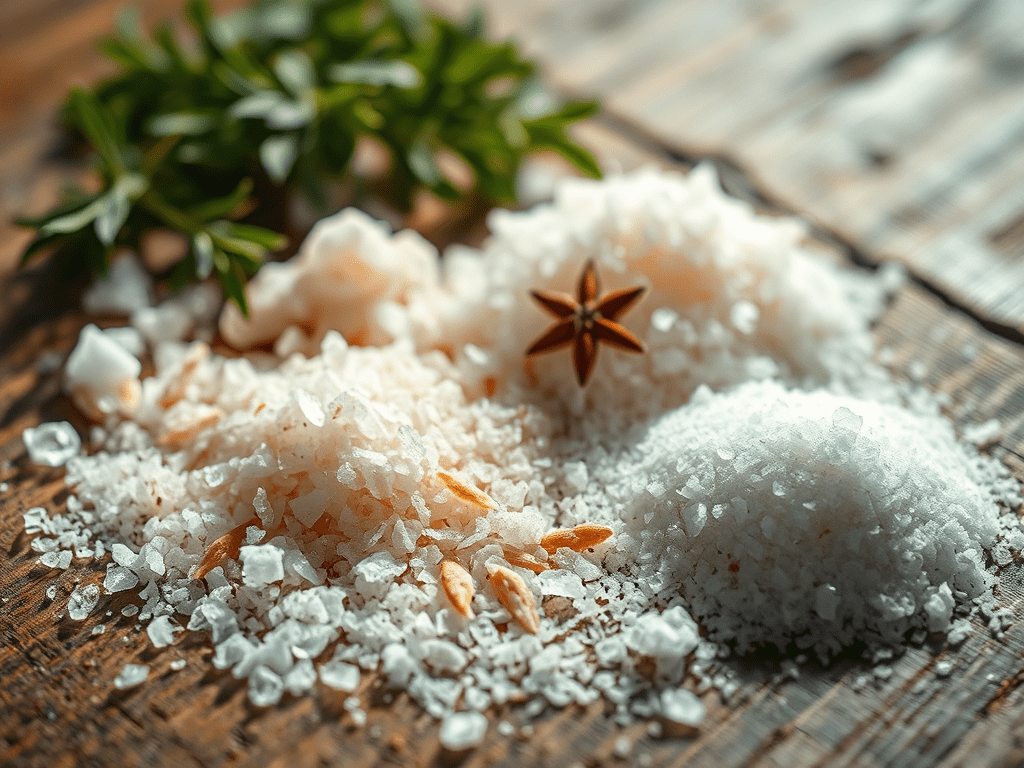
While many factors determine one’s cooking skills, the most crucial aspect at the amateur level is probably getting the seasoning right. When people say they can’t even cook ramen properly, it’s often because they can’t get the water-to-seasoning ratio correct, showing how critical seasoning is in amateur cooking. Adjusting the saltiness of food, although seemingly simple, is surprisingly difficult
Saltiness is perceived through the interaction of sodium ions (Na+) from salt with epithelial sodium channels in taste cells. Besides sodium ions, other ions can also interact with taste cell receptors to produce a salty taste, depending on their concentration. Ions similar in size to sodium ions, such as ammonium (NH4+), potassium (K+), calcium (Ca2+), and lithium (Li+), can also taste salty, but they may also introduce bitterness or sourness. The size of the anion paired with these cations can also influence the salty taste; smaller anions result in a stronger salty flavor, while larger anions tend to taste bitter. Thus, the taste of salt, especially natural sea salt, which contains various ions, can’t be described as simply salty.
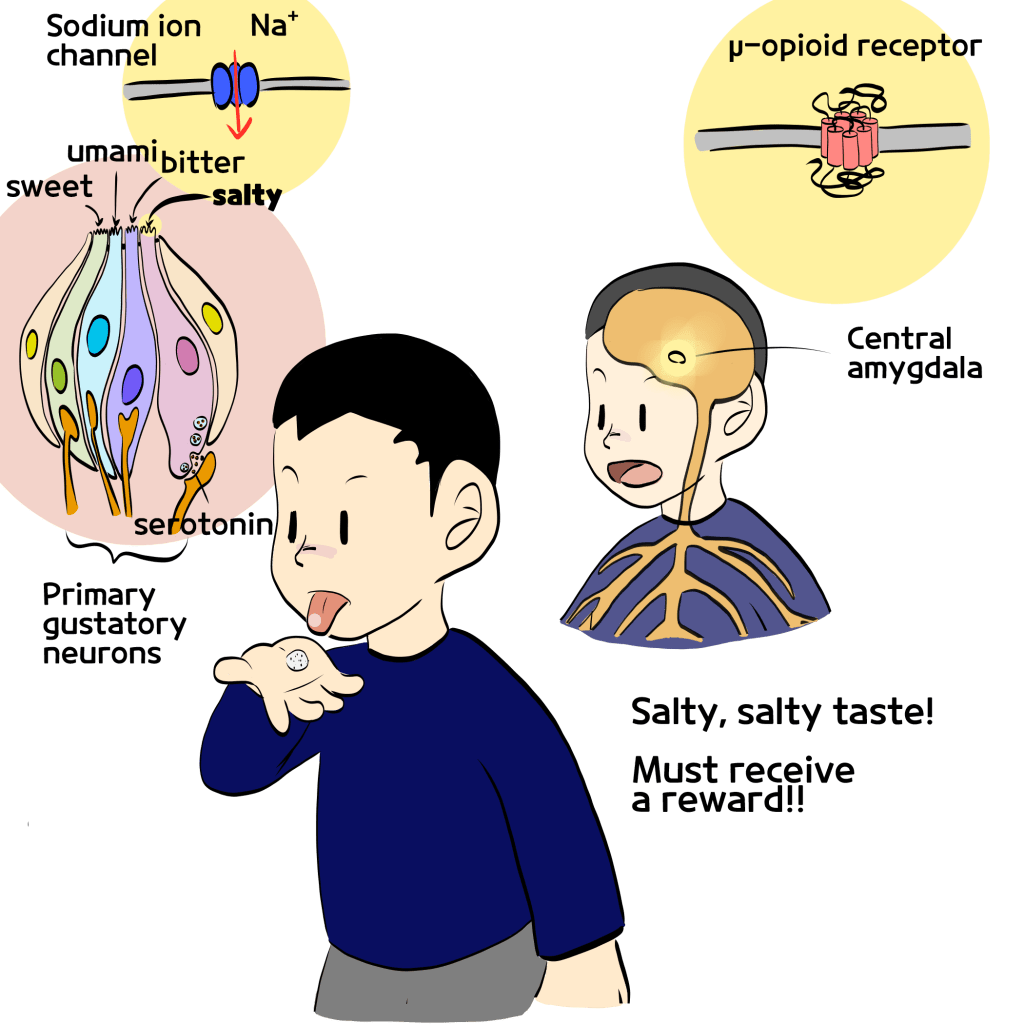
When salt enters the mouth, sodium ions are transported into taste cells through sodium channels, triggering the release of neurotransmitters and hormones like serotonin, vasopressin, and aldosterone, which are perceived as salty. The variation in individuals’ perception of saltiness is partly due to genetic differences, making it difficult to perfectly season food for everyone.
Sea salt is obtained by evaporating seawater in salt pans, containing about 30% sodium ions and 55% chloride ions, along with trace amounts of other ions like calcium and potassium. Refined salt, commonly used in everyday cooking, increases sodium chloride (NaCl) content to about 99.5%, reducing the influence of other salts and enhancing the pure salty taste. Additionally, refined salt has smaller particles than sea salt. While sea salt is recommended for its mineral content, the actual amounts of magnesium, calcium, and iron are too small to significantly impact dietary intake. However, because sea salt particles are larger, using the same volume results in less sodium chloride intake, potentially reducing sodium consumption. Iodized salt is also available to prevent iodine deficiency, which can cause various thyroid disorders.
Rock salt, such as pink salt, is sometimes touted as healthier due to its mineral content, but like other salts, it primarily consists of sodium chloride (~98.5%) and contains only trace amounts of minerals.
Sodium ions are essential for life, playing a crucial role in various metabolic processes, nerve transmission, maintaining fluid balance, blood pH, osmotic pressure, and blood pressure. This necessity drives our craving for sodium. Dehydration treatment often involves salt to replenish lost sodium, and sports drinks also contain sodium ions. While sodium deficiency is rare, excessive intake is a common issue. The lethal dose for sodium chloride is about 3 g/kg, meaning a 154 lbs adult would need to consume 7.4 oz in one go, which is highly unlikely. The concern with sodium chloride is chronic overconsumption, exceeding the recommended intake over time.
Excessive sodium intake is linked to various health issues. The World Health Organization (WHO) recommends a daily sodium intake of less than 2 g (~0.07 oz), while a minimum of 500 mg is essential. Sodium intake triggers a rewarding response in the brain via neurotransmitter release, which can lead to addiction. Recent studies suggest that opioid receptors might be involved in this addiction mechanism, similar to alcohol and sugar addiction.
One teaspoon of table salt contains approximately 2.3 grams (0.08 oz) of sodium. To put this into perspective, a single bowl of many commercially prepared soups, such as ramen, miso soup, or chicken noodle soup, can contain a similar amount of sodium. According to the Centers for Disease Control and Prevention (CDC), the average daily sodium intake in the US is around 3.4 g, well above the recommended amount. Chronic excessive intake increases the risk of hypertension, cardiovascular diseases, chronic kidney disease, and calcium deficiency.
To address excessive sodium intake, scientists are exploring alternatives. Other chlorides, similar to those in sea salt, often have mixed flavors, including bitterness and sourness, making them unsuitable substitutes for sodium chloride. Peptides with a salty taste have been developed but are not yet commercially successful. Recently, monosodium glutamate (MSG) has been recommended as a sodium chloride substitute to control intake. Once vilified as an unhealthy additive, MSG is now being reconsidered as a healthier alternative. Let’s delve into MSG and other common seasonings like soy sauce, traditionally used for seasoning.
Monosodium glutamate (MSG) is a widely used seasoning that enhances the umami flavor in food. Despite its bad reputation, studies have shown that MSG can be a safer alternative to sodium chloride, providing flavor without significantly increasing sodium intake. MSG contains about one-third the amount of sodium compared to table salt. Therefore, it can reduce overall sodium consumption when used as a substitute.
Soy sauce, another common seasoning, is made by fermenting soybeans, wheat, and salt. It contains various amino acids, organic acids, and other compounds that contribute to its rich flavor profile. Soy sauce can add depth to dishes with a lower sodium content than pure salt, making it a useful alternative for seasoning.
Seasoning plays a crucial role in cooking, significantly impacting the taste of food. Understanding the science behind salt and other seasonings can help improve cooking skills and promote healthier eating habits. While sodium is essential for life, its overconsumption poses health risks. Alternatives like MSG and soy sauce can help reduce sodium intake while maintaining flavor. As with any aspect of diet, moderation and informed choices are key to enjoying food while preserving health.
References
- Purves et al. Neuroscience. 2nd edition, 2001, Sinauer Associates, Inc.
- Valentová and Panovská, Encyclopedia of Food Sciences and Nutrition (Second Edition), 2003, 5180
- Hayes et al. Physiology & Behavior, 2010, 4, 100
- Streit, Sea Salt: Uses, Benefits, and Downsides, Healthline, Nov. 12, 2019
- https://www.cdc.gov/salt/about/index.html
- Drake and Drake, J. Sens. Stud., 2011, 26, 25
- Smith et al. PNAS, 2016, 113, 13893
- He et al., The Lancet, 2009, 374, 1765-1772
- Smyth et al., Am. J. hypertens. 2014, 27, 1277
- Devine et al., Am. J. Clin. nutr., 1995, 62, 740
- Wallace et al. Nutrients 2019, 11, 2691
 Leo & Leah
Leave a comment