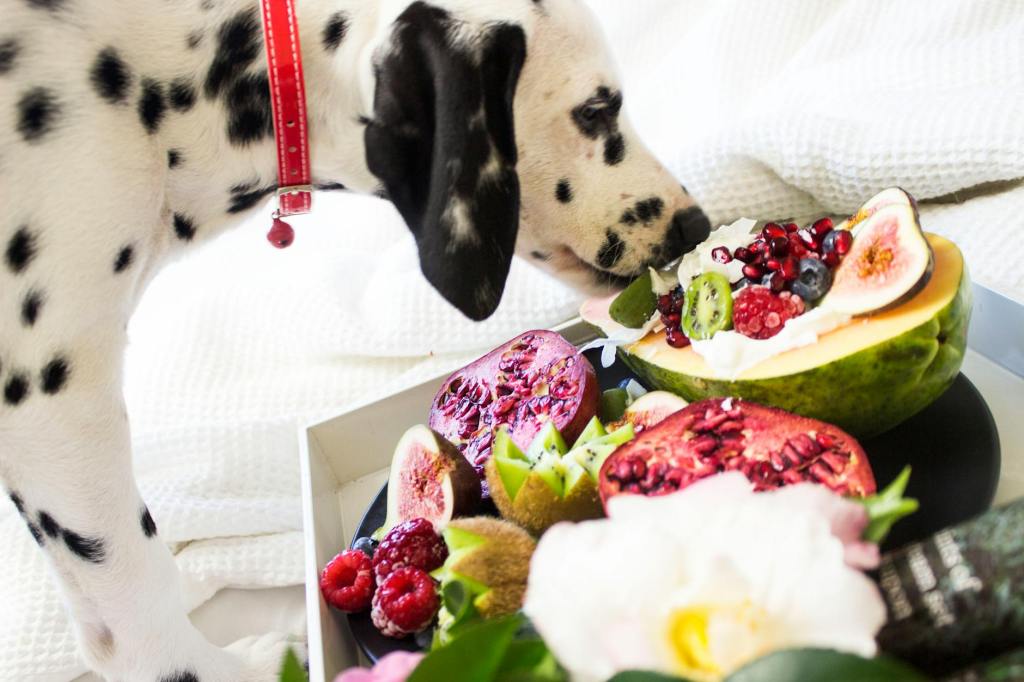
Digestive Adaptations in Dogs
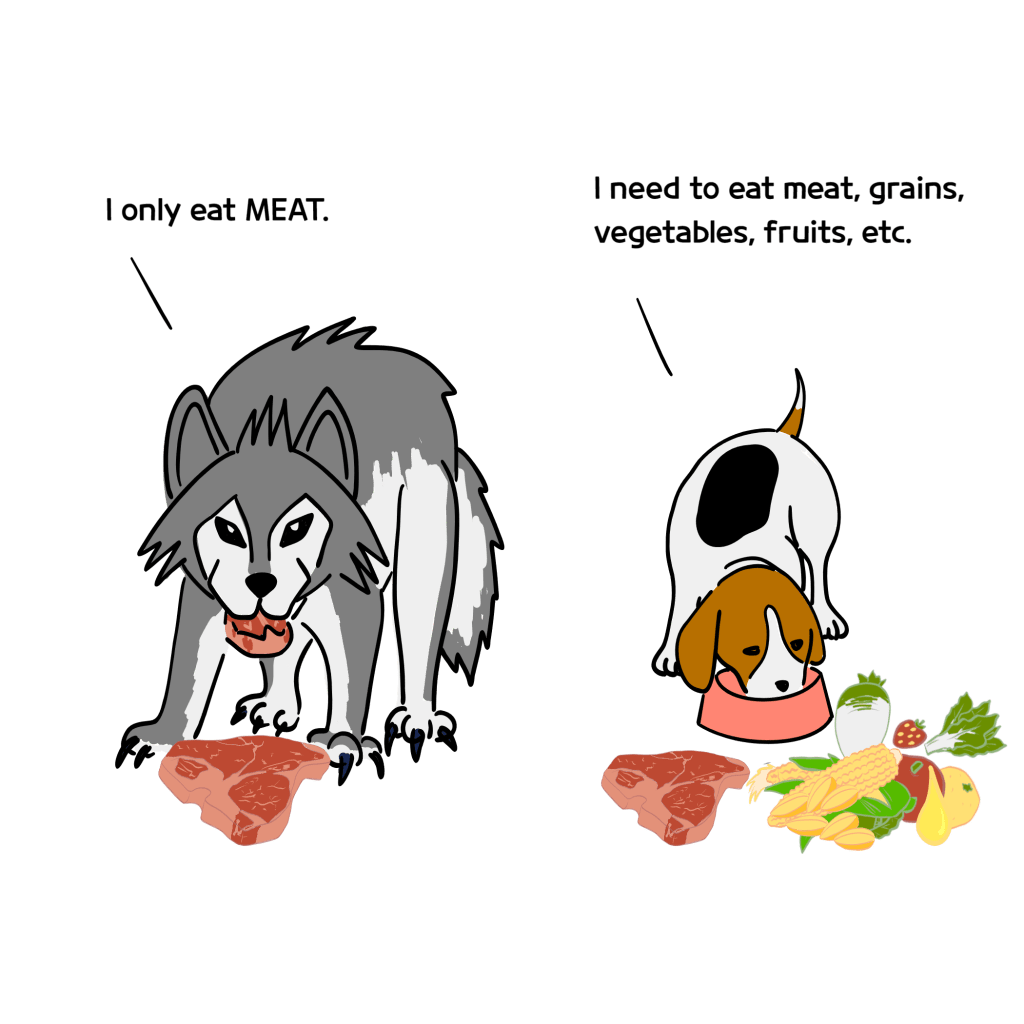
Wolves are carnivores (as are cats).
Dogs, however, have become omnivores while living alongside humans, unlike their wolf ancestors.
They require a nutritional balance of 18 – 25% protein, 10 – 15% fat, and 30 – 50% carbohydrates.
This nutritional profile is very similar to that of the human diet, which consists of 10 – 35% protein, 20 – 35% fat, and 45 – 65% carbohydrates.
Canine Gastrointestinal tract
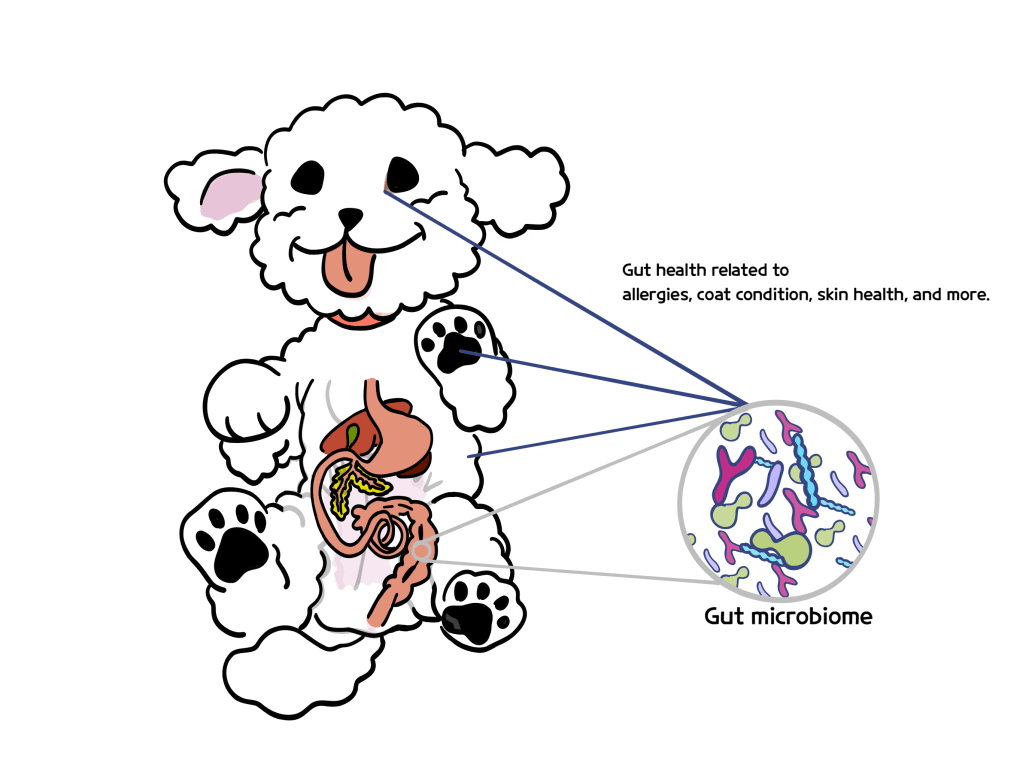
In carnivores like cats and wolves, the digestive tract is very short because protein, if it stays in the gut for too long, can decompose and promote the growth of harmful bacteria.
As dogs evolved into omnivores, their digestive systems lengthened to better digest carbohydrates, similar to humans. This means that food stays in their gut longer.
Like humans, dogs can pass gas (fart) and have foul-smelling feces.
The gut microbiome, just like in humans, is a crucial factor in a dog’s overall health.
Metabolic Differences Between Humans and Dogs
Humans are omnivores and can metabolize a wide range of substances found in various foods at the molecular level. This capability is supported by a variety of enzymes present in the human body that can process these diverse molecules.
In dogs, however, the shift from the carnivorous diet of their wolf ancestors to an omnivorous diet occurred relatively quickly as they began living with humans. As a result, dogs have a more limited metabolic capacity than humans.
While the toxicity of any substance depends on the dose, substances that show toxicity even at low doses are called acute toxicants. For dogs, substances that are non-toxic to humans can be fatal even in small amounts.
Foods Toxic to Dogs
Caffeine and Theobromine
Avoid giving dogs any foods containing chocolate, coffee, cola, or energy drinks:
- Dogs metabolize caffeine much more slowly than humans, so even small amounts can cause serious symptoms like agitation, tremors, vomiting, and diarrhea.
- Just 700 mg of caffeine can be fatal for a small 5 kg dog.
- Chocolate is especially dangerous because it contains theobromine, which dogs cannot break down. This can lead to vomiting, diarrhea, tremors, and seizures.
- A single milk chocolate bar can be toxic for small dogs. For larger dogs, chocolate can still be dangerous if they eat enough of it. Theobromine takes over 17 hours to be half-processed in the canine system, so it’s crucial to prevent them from consuming more after the initial exposure.
Onions, Chives, and Garlic
Onions, chives, and garlic contain sulfur compounds, including thiosulfate, which dogs cannot metabolize like humans.
- Sulfur compounds can damage a dog’s red blood cells due to differences in their red blood cell characteristics.
- When red blood cells are destroyed, dogs can develop anemia, leading to symptoms such as lethargy, loss of appetite, vomiting, diarrhea, and jaundice.
- These symptoms typically appear 1 – 2 days after consuming food containing onions or garlic.
- Consuming just 15 – 30 g of onions or 5 g of garlic per kilogram of body weight can be fatal for dogs.
- Since thiosulfate, the most dangerous compound takes 5 – 6 days to be half-processed in the canine body, it’s crucial to prevent dogs from consuming foods containing onions, chives, or garlic over any period of time, even weeks apart.
Grapes and raisins
Grapes and raisins can cause acute kidney failure in dogs.
- Initially, it was suspected that pesticides or mold on grapes might be the cause, but it has been consistently observed that grapes themselves are toxic to dogs.
- The exact substance in grapes that causes toxicity in dogs is still unknown.
Nuts (Especially Macadamia Nuts)
While peanuts and peanut butter are commonly given as dog treats, other nuts should be fed with caution.
- The exact toxic substance is unknown, but macadamia nuts are particularly dangerous and can cause acute toxicity, leading to muscle weakness, tremors, vomiting, diarrhea, and high fever.
- Walnuts, pecans, and Brazil nuts are high in fat, which can cause digestive issues and pancreatitis.
- Almonds, due to their sharp shape, can cause intestinal blockages.
- When giving peanuts or peanut butter, avoid products containing xylitol, and check for excessive salt and sugar content. Provide only in moderation. After offering peanuts or peanut butter, monitor your dog for any allergic reactions, especially when given for the first time.
Milk and Dairy Products
- After weaning, dogs often become lactose intolerant, meaning they can’t digest dairy products.
- When dogs consume milk or dairy, they may experience vomiting, diarrhea, and stomach pain due to their inability to break down lactose.
Yogurt and Cheese
- While yogurt and cheese can provide beneficial probiotics, they should be low in lactose and sugar to avoid digestive issues.
Avocado
- There is some debate about whether a substance called persin in avocados is toxic to dogs. Additionally, the large, hard seed poses a choking hazard and can cause intestinal blockages if swallowed.
Xylitol and Products Containing Artificial Sweeteners
- Unlike humans, xylitol stimulates insulin release in dogs, leading to hypoglycemia. Dogs cannot metabolize xylitol properly, causing stress and potential damage to the liver.
Small Bones, such as Fish Bones or Chicken Bones
- These can cause internal organ perforation.
Foods High in Sugar and Fat
- Can lead to various metabolic disorders and obesity.
Foods High in Salt
- Can cause salt poisoning and are harmful to kidney health. The lethal dose for dogs is 2 – 4 g of salt per kilogram of body weight.
Introducing New Foods
- When offering a new food to your dog, it’s important to research its toxicity and lethal dose, start with a small amount, observe the dog’s reaction, and then provide an appropriate amount.
References
- Case, The Dog: Its Behavior, Nutrition, and Health, 3rd ed., 2023, WIley
- Gates, Dogology: The Weird and Wonderful Science of Dogs, 2021, Quadrille
- Lewis, Biology of Dogs: From Gonads Through Guts to Ganglia, 2021, Dogwise
- Folge, New Encyclopedia of Dog, 2000, DK
 Leo & Leah
Leave a comment