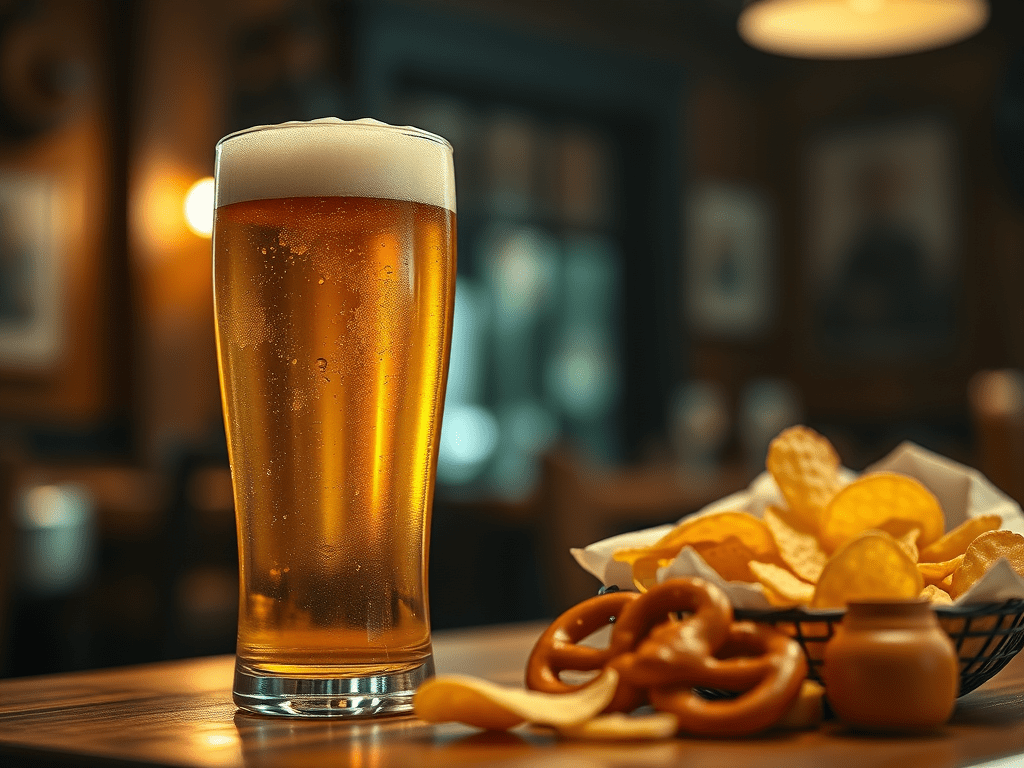
We’ve explored some of the common types of beer available at beverage stores and pubs, but there are even more varieties that offer us the joy of choice. Beer, as a representative of fermented beverages, has been with us for the longest time, but it also carries many misconceptions. Let’s take a look at the molecular-level impact of beer on our health.
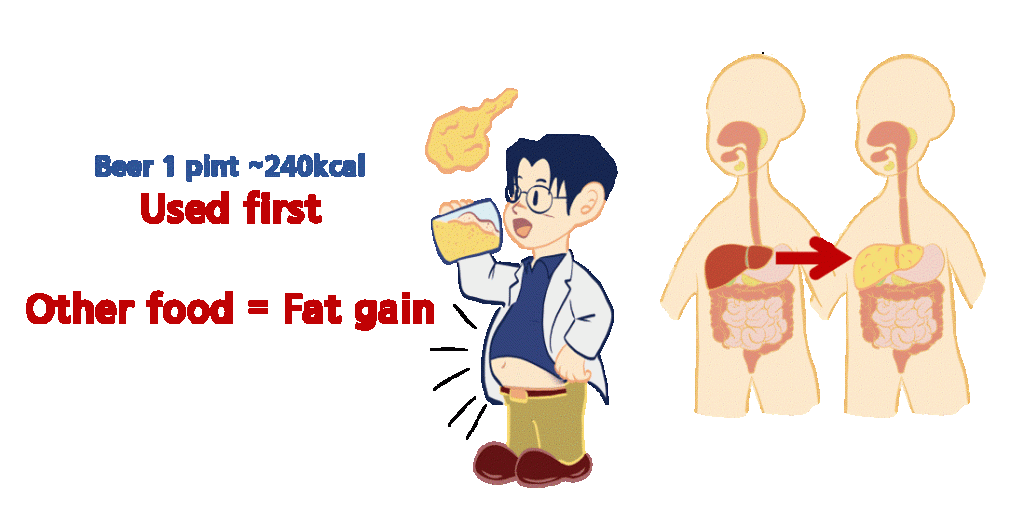
There is a theory that beer was an important source of nutrition for Europeans in the Middle Ages. The carbohydrates and ethanol from grains provided high caloric content. Ethanol has an energy density of 7 kcal per gram. In comparison, proteins and carbohydrates provide 4 kcal per gram, and fats provide 9 kcal per gram. A 16 fl oz (one pint) can of beer contains about 240 kcal, comparable to a chocolate bar or a bowl of rice. This is why many beer enthusiasts end up with what is colloquially known as a “beer belly.” This notion is partly true, but also partly misleading.
Unlike the three major nutrients—carbohydrates, fats, and proteins—excess alcohol (ethanol) is not stored in the body as fat. Instead, it is metabolized by the liver and used up quickly, earning the term “empty calories.” So, drinking a can of lager beer with 5% alcohol content leaves you with only around 65 kcal that can be stored in your body, most of which are from carbohydrates. However, we rarely drink beer alone; it is usually accompanied by snacks or meals.
The food we consume is primarily used as the energy source for our basal metabolic functions. An adult male has a basal metabolic rate of about 1,300 to 2,000 kcal per day and an additional 500 kcal for daily activities. If our daily caloric intake exceeds this metabolic rate, the excess calories are stored as fat. The body strives to maintain homeostasis, so overeating or undereating for a day does not significantly change our body weight long-term. Moreover, not all the calories we consume are fully utilized by the body.
When we drink beer, the 175 kcal from alcohol per can is used first. Additionally, ethanol promotes the synthesis of triglycerides in the liver, making the extra calories from food more easily stored as fat. For instance, buying and consuming four cans of beer from a convenience store adds about 1,000 kcal to your intake. The calories from the accompanying snacks are stored more efficiently in your body. Most cases of abdominal obesity are due to high caloric intake from frequent drinking, combined with low physical activity and a low basal metabolic rate.
In summary, while beer can be a delightful part of social gatherings and personal relaxation, it is important to be aware of its caloric content and its effects on our health. Beer is not a healthy drink and should be consumed in moderation to avoid unwanted health consequences.
References
- Mysels, J. Opioid Manag. 2010 6, 445
- https://www.chemsafetypro.com/Topics/CRA/acute_toxicity_ld50_lc50.html
- https://www.therecoveryvillage.com/alcohol-abuse/
- Chiara, Alcohol Health Res. World. 1997, 21, 108
- Cervera-Juanes et al. Mol Psychiatry. 2016, 21, 472
- https://www.drugabuse.gov/drug-topics/alcohol
- Palmer, (2017) How To Brew: Everything You Need to Know to Brew Great Beer Every Time, 4th Ed., Brewers Publications
- Hornsey, (2003) A History of Beer and Brewing, Royal Society of Chemistry
- Olaniran et al. J. Inst. Brew. 2017, 123, 13
- Devitt, 500 years ago, yeast’s epic journey gave rise to lager beer, https://news.wisc.edu/. 2011. 08. 22.
- Stack, A Concise History of America’s Brewing Industry, EH.net
- Gajanan, How to Talk About Beer Like a Pro, Time, 2018. 04. 07
- https://beerandbrewing.com/dictionary/tUHp3R5egg/
- Ting & Ryder, J. Am. Soc. Brew, Chem., 2017, 75, 161
- BYO Staff, Using Roasted Barley: Tips from the Pros, byo.com, 2004. 01
- https://www.simpsonsmalt.co.uk/blog/malt-production-process-roasting/
- Carlin and Rosentha, (1998) Food and eating in medieval Europe, Hambledon Press
- Mitchell and Herlong, Annu. Rev. Nutr., 1986, 6, 457
- Zelman, The Truth About Beer, webMD, 2014. 08.
- Hobson and Maughan, Alcohol Alcohol., 2010, 45, 366
- Cuzzo and Lappin, Vasopressin (Antidiuretic Hormone, ADH), StatPearls [Internet], 2019
- Chiba and Phillips, Addict. Biol, 2000, 5, 117
- Fugelsang and Edwards, (2010) Wine Microbiology, 2nd Ed., Springer Science and Business Media
- Adams, The Science of Winemaking Yeasts, Sevenfiftydaily, 2018. 06. 06.
- Remize et al. Yeast, 2003, 20, 1243
- Russan, The Science of Tannins in Wind, SevenFiftyDaily, 2019. 02. 07.
- Rovner, C&En, 2006, 84, 30
- Robles et al. TrAC-Trends Analyt. Chem., 2019, 120, 115630
- Hines, These Are the Chemical Compounds That Make Wine Taste So Good, Vinepair, 2017. 09. 24.
- Corliss, Is red wine actually good for your heart?, Harvard Healthy Blog, 2018. 02. 19.
- Panesar (2014) Biotechnology in Agriculture and Food Processing: Opportunities and Challenges, CRC Press
- Bang et al. Korean J. Food Cook Sci., 2016, 32, 44
- Takahashi & Kohno, PLos One, 2016, 11, e0150524
- https://en.sake-times.com/learn/the-science-of-sake-aroma
- https://thesool.com
- Casey & Ingledew, Crit. Rev. Microbiol., 1986, 13, 219
- Jin et al. Trends Food Sci. Technol. 2017, 53, 18
- Karlsson & Friedman, Sci. Rep., 2017, 7, 6489
- Tsakiris et al. J Sci Food Agric 2014; 94: 404
- http://www.snuh.org/health/compreDis/OT01/6.do
 Leo & Leah
Leave a comment