
Adaptation and Intelligence of Dogs
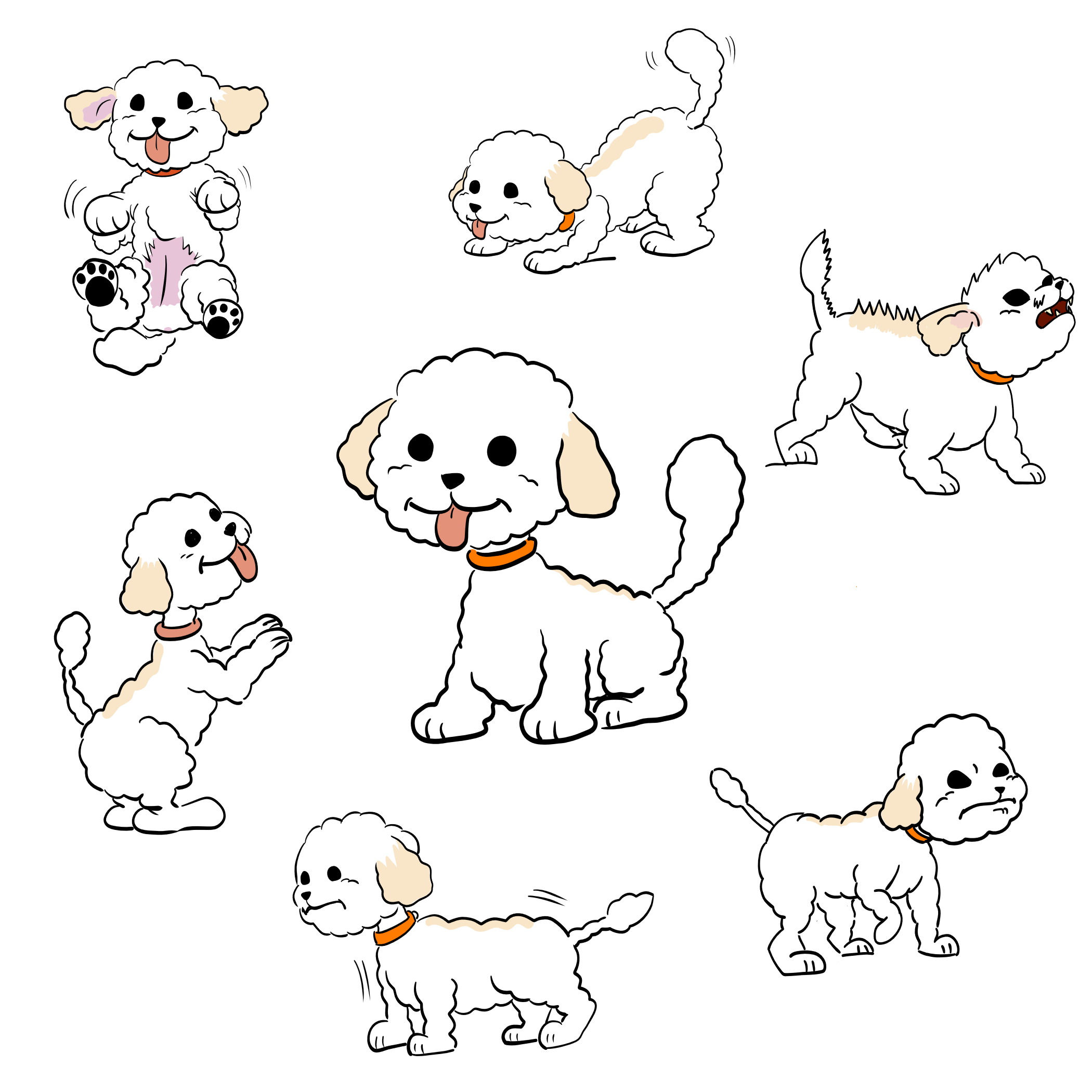
- Living with humans and other domesticated animals has lowered dogs’ wariness of unfamiliar animals and people.
- Through communication with humans, dogs have developed the ability to express a wide range of facial expressions and body language to appeal to people (Leah Learns about Pups link).
- Dogs are highly intelligent animals. They adapt well to new environments, understand which behaviors lead to rewards, and can remember and comprehend around 165 human words.
- Dogs engage in more diverse interactions with humans than with other dogs and tend to prefer interacting with humans.
Canine Social Behavior
- Unlike gray wolves, which live in packs, dogs have developed a different social structure while living with humans.
– Unlike wolves, dogs do not engage in pack living based on cooperation, division of roles, responsibility, and mutual care.
– A wolf pack is typically centered around an alpha male and female pair.
– They usually mate with one partner and share the responsibility of raising offspring.
– In the case of dogs, they may establish a hierarchy similar to a wolf pack when living together.
– However, they mate freely. The mother typically raises the offspring alone.
– Additionally, as pets with guaranteed safety, dogs can give birth twice a year regardless of the season, unlike wolves, who generally have one litter per year in the spring.
Dogs Don’t Feel Guilty
- Dogs primarily experience two emotions: joy and fear.
- Their behavior is based on rewards (like treats or praise) associated with specific actions.
- While a dog’s emotions are simple, they can share emotions with other dogs or feel jealousy, especially concerning their owner.
- They tend to avoid actions associated with negative outcomes. Commands linked to punishment or frightening experiences may be rejected altogether.
- While memories of being scolded can sometimes deter certain behaviors, dogs are more likely to forget commands associated with negative experiences more quickly than a 3-4-year-old child, making such commands less effective.

- Dogs don’t inherently feel guilt, but they can sense when their owner is angry and react with fear. This fearful expression is often mistaken for a look of guilt or remorse.
- Dogs can feel jealous if their owner pays more attention to another dog or animal. In such cases, they may refuse to interact with the object of their jealousy or even become aggressive.
- When a dog tilts its head while listening to a person speak, it’s focusing on the sounds to better understand what’s being said.
- Dogs struggle to understand words when spoken with a strong or angry tone. They may become frightened, but they don’t necessarily comprehend the words being said.
- Positive reinforcement training is effective because it relies on positive memories.
- Training based on negative experiences tends to yield poor results.
The Role of Scent in Dog Communication
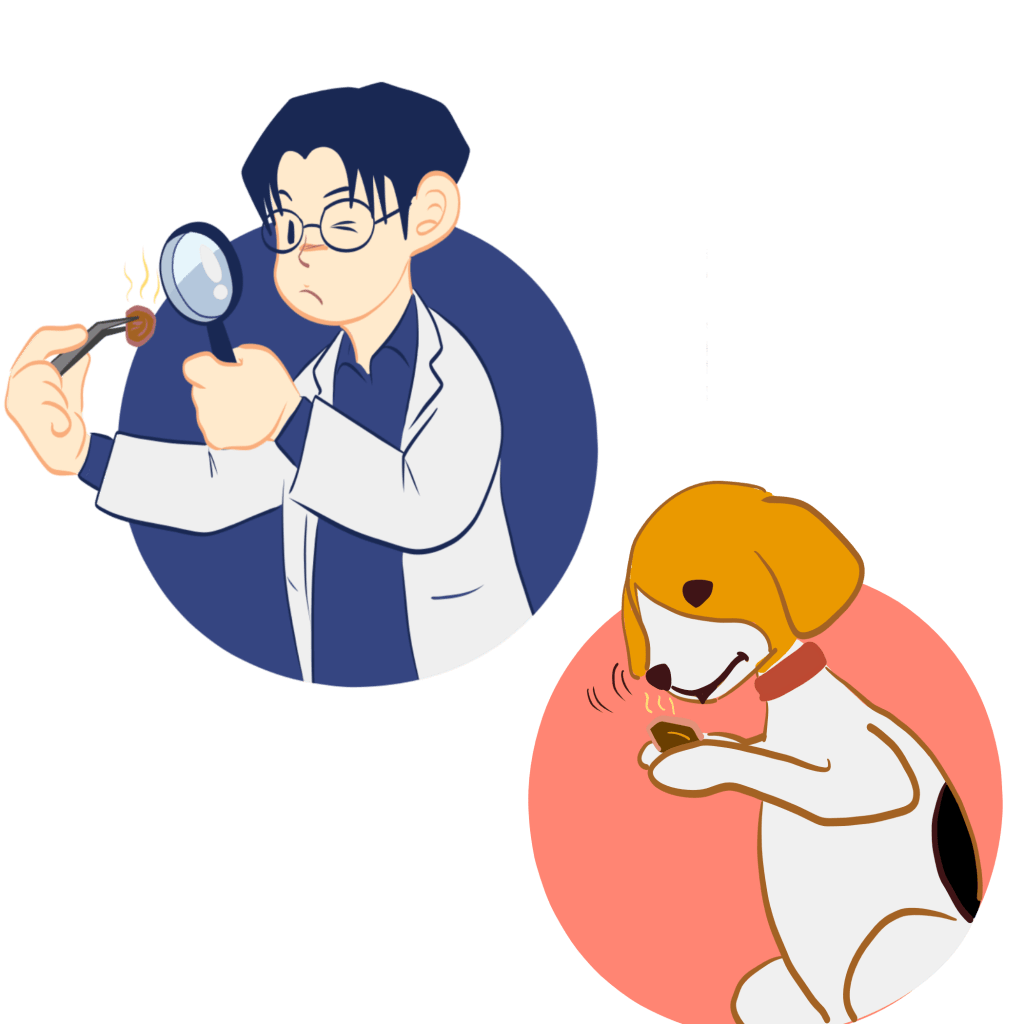
- A dog’s sense of smell is developed 10,000 to 100,000 times more than that of humans.
- Dogs rely heavily on their sense of smell for information and use it as a primary means of communication with other dogs.
- When dogs meet, they gather information through scent.
– Males primarily use the pheromone scents from the anal glands and the apocrine sweat glands located around the genitals to gather information.
– Females mainly rely on pheromone scents secreted from the cheek glands and ear glands for information.
- Dog urine also contains pheromones and carries a lot of information. When dogs urinate in various places while walking, it’s like leaving a calling card to announce their presence.
- Just like human fingerprints, the wrinkles on a dog’s nose are unique to each individual dog.
References
- Case, The Dog: Its Behavior, Nutrition, and Health, 3rd ed., 2023, WIley
- Gates, Dogology: The Weird and Wonderful Science of Dogs, 2021, Quadrille
- Lewis, Biology of Dogs: From Gonads Through Guts to Ganglia, 2021, Dogwise
- Folge, New Encyclopedia of Dog, 2000, DK
 Leo & Leah
Leave a comment