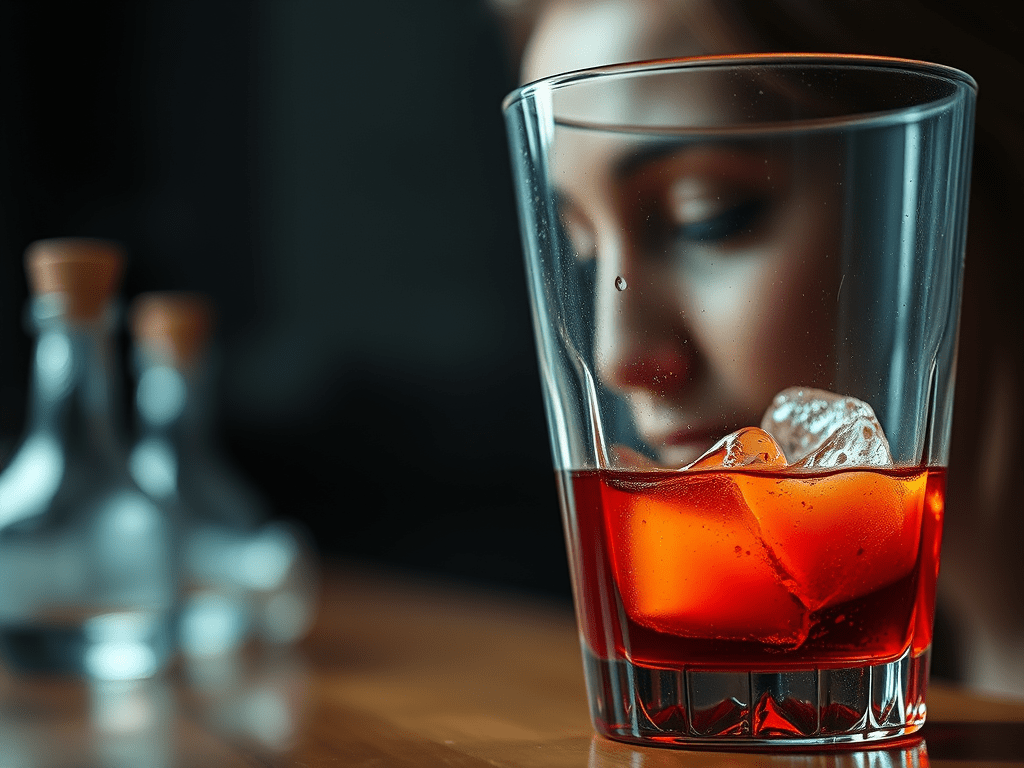
So far, on this blog, the most frequently discussed component in beverages was sugar. Even 100% fruit juice can harm health when consumed excessively due to its sugar content. Substances that are harmful to the body are called “toxic substances.” So, is sugar or fructose a toxic substance? Some argue that sugars should be classified as addictive substances. Addiction is defined as “a condition resulting from consuming, inhaling, or contacting a toxic substance, leading to life-threatening or pathological symptoms.”
Is the sugar we consume daily truly a toxic substance? Generally, when we refer to toxic substances, we mean those with acute toxicity, which are dangerous when consumed in a short period. As previously mentioned, Paracelsus (1493-1541), considered the first chemist, famously said, “The dose makes the poison.” This is a crucial definition. Nutrients are substances used by our bodies for survival after ingestion. However, when consumed in amounts that our bodies cannot handle, even nutrients can make us sick or endanger us. For example, the median lethal dose (LD50) of sugar for a 155 lbs adult is 4.6 lbs (2,100 g, about 30 g sugar/kg body weight & 0.0661 lbs sugar/lbs body weight). The LD50 is the amount that causes the death of 50% of test subjects when consumed in a short period, usually within 24 hours. Though determined through animal testing, the LD50 can vary slightly when applied to humans. Regardless, common sense tells us that consuming 4.6 lbs of sugar at once is improbable. The LD50 of water is 0.1984 pounds (water) per pound (body weight), meaning a 150 lbs adult would be at risk if they drank 213 fl oz (6.3 liters) at once. Considering that drinking 68 fl oz of water a day can be challenging, consuming 213 fl oz is unlikely. Thus, substances like water, sugar, MSG (LD50 ~ 0.035 lbs MSG/lbs weight), and ethanol (LD50 ~ 0.0154 lbs alcohol/lbs weight) are generally not considered toxic.
However, sometimes astonishing events occur around us. For instance, consuming more than the LD50 of alcohol (ethanol) in one night. Although less common now, there have been reports of college freshmen dying from acute alcohol poisoning. Many people have experienced or know someone who has been hospitalized due to alcohol intoxication. A 155 lbs adult would need to drink about two-thirds of a bottle (~ 18 fl oz) of 40% whiskey or more than a case of 24-canned ale (~6%) to reach the LD50. Stories about two college friends suffering from hangovers after finishing a bottle of tequila in one night are extremely dangerous, with a 50% chance of being life-threatening. No one consumes 4.6 lbs of sugar or drinks over 213 fl oz of water overnight. So why is alcohol, a substance with active ethanol, consumed in such quantities despite being considered non-toxic?
Toxicity can be more precisely classified beyond acute toxicity to include subacute toxicity (lasting several months), chronic toxicity (lasting several years), carcinogenicity, and teratogenicity (toxicity affecting fetuses). Sugars may not have acute toxicity but can be considered substances with subacute and chronic toxicity. Alcohol, ethanol, in other words, is generally not considered acutely toxic but can exhibit all other forms of toxicity. Regular drinking habits pose significant risks of chronic toxicity, defined as “cumulative damage to specific organ systems, taking months or years to be recognized as clinical diseases.” Ethanol is also carcinogenic due to the production of acetaldehyde and reactive oxygen species during metabolism. Drinking alcohol during pregnancy can constrict placental blood vessels, reducing the supply of nutrients and oxygen to the fetus. The ethanol transferred to the fetus can cause brain damage and affect the growth of tissues, organs, and systems, leading to physical, mental, and behavioral defects in the newborn.

Ethanol paralyzes the central nervous system upon ingestion. Once absorbed in the small intestine, ethanol travels through the blood to the brain, disturbing the neuronal cell membranes, ion channels, enzymes, and receptor proteins. Ethanol, having both hydrophilic and hydrophobic properties, can cause proteins to aggregate in an aqueous solution, a principle utilized in using ethanol as a topical disinfectant. It also binds directly to neuronal receptors, slowing down neural activity and impairing cognitive and motor control, which is why tasks such as operating machinery or driving are prohibited after drinking.
While the exact mechanisms remain unclear, alcohol consumption increases dopamine levels in the brain, leading to addiction. One possible cause is ethanol’s inhibition of the enzyme MAOA, responsible for breaking down dopamine. Prolonged ethanol consumption due to alcohol addiction causes neurons, which have been deprived of normal neurotransmitter reception, to overreact to small amounts of neurotransmitters, making alcoholics more prone to violent behavior.
While ethanol paralyzes the central nervous system, the liver works to metabolize and expel it. Ethanol is oxidized to acetaldehyde by alcohol dehydrogenase (ADH) and further oxidized to acetic acid by aldehyde dehydrogenase (ALDH). Acetic acid, a weak acid, is not significantly harmful and is eventually converted to carbon dioxide and water for excretion. However, acetaldehyde is about ten times more toxic than ethanol (oral LD50 ~ 0.00146 lbs chemical/ lbs weight, 661 mg/kg) and is classified as a Group 1 carcinogen.
More than 30% of East Asians and up to 5% of Caucasians and Africans have a deficiency in aldehyde dehydrogenase. The facial flushing experienced after drinking alcohol is due to the slower metabolism of ethanol in these individuals. Even those without this enzyme deficiency can experience hangovers, including headaches and vomiting, if they consume more alcohol than the liver can process overnight. Ethanol metabolism also generates reactive oxygen species, causing inflammation in the body.
This chapter will explore the science behind the beverage known as “alcohol,” which contains ethanol. Before delving into the chemistry within a glass of alcohol, it is important to acknowledge the numerous harmful effects of this beverage. Despite its toxic nature, alcohol is frequently and abundantly consumed, which highlights its significant issues. Alcohol has accompanied human history and culture, with its chemical effects on the central nervous system and dopamine secretion contributing to many historical events. It is also a staple in various culinary traditions. The deep integration of alcohol into our lives offers us a wide array of choices due to its diversity. This diversity is attributed to ethanol’s amphiphilic nature, allowing it to interact with various molecules in an aqueous solution. Let us now explore the science occurring within a glass of alcohol.
References
- Mysels, J. Opioid Manag. 2010 6, 445
- https://www.chemsafetypro.com/Topics/CRA/acute_toxicity_ld50_lc50.html
- https://www.therecoveryvillage.com/alcohol-abuse/
- Chiara, Alcohol Health Res. World. 1997, 21, 108
- Cervera-Juanes et al. Mol Psychiatry. 2016, 21, 472
- https://www.drugabuse.gov/drug-topics/alcohol
- Palmer, (2017) How To Brew: Everything You Need to Know to Brew Great Beer Every Time, 4th Ed., Brewers Publications
- Hornsey, (2003) A History of Beer and Brewing, Royal Society of Chemistry
- Olaniran et al. J. Inst. Brew. 2017, 123, 13
- Devitt, 500 years ago, yeast’s epic journey gave rise to lager beer, https://news.wisc.edu/. 2011. 08. 22.
- Stack, A Concise History of America’s Brewing Industry, EH.net
- Gajanan, How to Talk About Beer Like a Pro, Time, 2018. 04. 07
- https://beerandbrewing.com/dictionary/tUHp3R5egg/
- Ting & Ryder, J. Am. Soc. Brew, Chem., 2017, 75, 161
- BYO Staff, Using Roasted Barley: Tips from the Pros, byo.com, 2004. 01
- https://www.simpsonsmalt.co.uk/blog/malt-production-process-roasting/
- Carlin and Rosentha, (1998) Food and eating in medieval Europe, Hambledon Press
- Mitchell and Herlong, Annu. Rev. Nutr., 1986, 6, 457
- Zelman, The Truth About Beer, webMD, 2014. 08.
- Hobson and Maughan, Alcohol Alcohol., 2010, 45, 366
- Cuzzo and Lappin, Vasopressin (Antidiuretic Hormone, ADH), StatPearls [Internet], 2019
- Chiba and Phillips, Addict. Biol, 2000, 5, 117
- Fugelsang and Edwards, (2010) Wine Microbiology, 2nd Ed., Springer Science and Business Media
- Adams, The Science of Winemaking Yeasts, Sevenfiftydaily, 2018. 06. 06.
- Remize et al. Yeast, 2003, 20, 1243
- Russan, The Science of Tannins in Wind, SevenFiftyDaily, 2019. 02. 07.
- Rovner, C&En, 2006, 84, 30
- Robles et al. TrAC-Trends Analyt. Chem., 2019, 120, 115630
- Hines, These Are the Chemical Compounds That Make Wine Taste So Good, Vinepair, 2017. 09. 24.
- Corliss, Is red wine actually good for your heart?, Harvard Healthy Blog, 2018. 02. 19.
- Panesar (2014) Biotechnology in Agriculture and Food Processing: Opportunities and Challenges, CRC Press
- Bang et al. Korean J. Food Cook Sci., 2016, 32, 44
- Takahashi & Kohno, PLos One, 2016, 11, e0150524
- https://en.sake-times.com/learn/the-science-of-sake-aroma
- https://thesool.com
- Casey & Ingledew, Crit. Rev. Microbiol., 1986, 13, 219
- Jin et al. Trends Food Sci. Technol. 2017, 53, 18
- Karlsson & Friedman, Sci. Rep., 2017, 7, 6489
- Tsakiris et al. J Sci Food Agric 2014; 94: 404
- http://www.snuh.org/health/compreDis/OT01/6.do
 Leo & Leah
Leave a comment