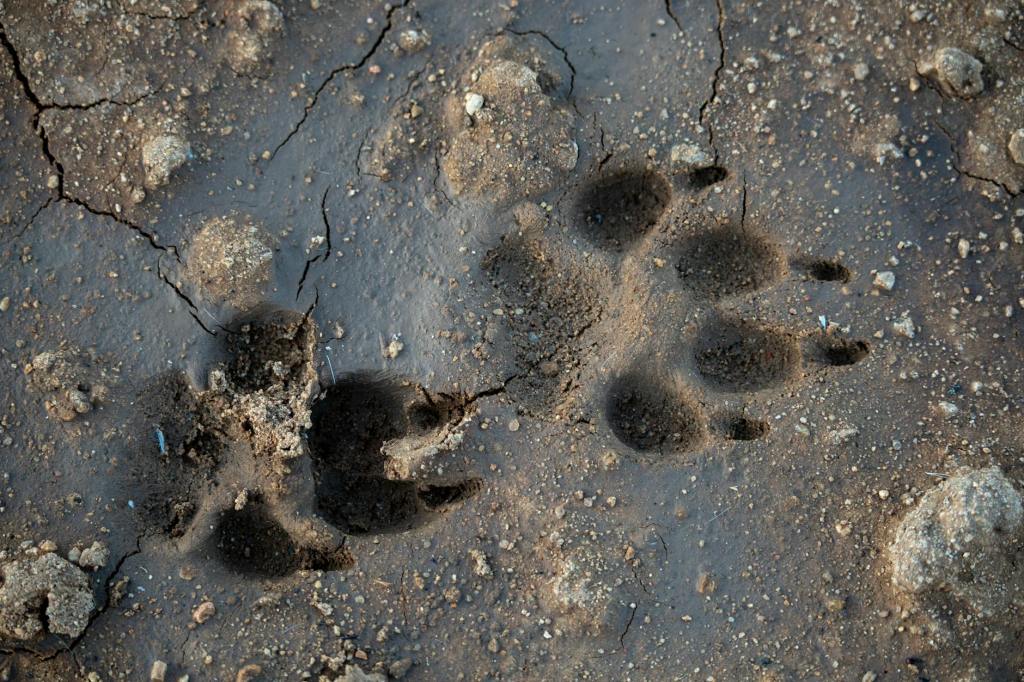
Canine Paws
- Dogs are digitigrade, meaning they walk on their toes, unlike humans who are plantigrade (walking on the soles of their feet) or animals like horses and cows who are unguligrade (walking on hooves).
- Because dogs walk only on their toes, their ankles are lifted. Digitigrade walking is characteristic of predators in nature, providing greater speed and agility.
- A dog’s paw comprises five parts: claws, digital pad, metacarpal pad, dewclaw, and carpal pad.
- The parts of a dog’s paws that touch the ground are made of tough keratinized epidermis.
- The largest part of a dog’s paw, shaped like an inverted heart in the center, is the metacarpal pad, which corresponds to the ball of the foot in humans.
- The four digital pads correspond to human toes.
- The carpal pad is only found on the front legs and doesn’t have an equivalent in human hands or feet. It helps increase friction with the ground to prevent slipping when going downhill or to stop quickly while running.
- The dewclaw, though it doesn’t have a direct human equivalent, is often compared to a human thumb. It is usually found only on the front paws, though some dogs have it on their hind paws as well, and it can help grip objects.
- A dog’s pads absorb shock when walking or running and have sweat glands that help regulate body temperature by releasing sweat.
Canine Claws
- Unlike human nails, a dog’s claws connect to bone and contain nerves and blood vessels. When trimming claws, it’s important not to cut into the area containing nerves and blood vessels, and it’s advisable to have disinfectant on hand just in case.
- The distinctive smell from a dog’s paws is due to various impurities, sweat, and moisture that create an environment for fungi and bacteria to grow on the rough surface of the fur and pads. On the other hand, if there’s a lack of moisture, the pads can crack and become injured.

Dog Paws and Claws Care
- Maintaining dog paw health through proper paws and claws care
– Regular nail trimming prevents discomfort from long claws. Use a dog-specific nail clipper and avoid cutting too close to the nerves and blood vessels inside the claw. If bleeding occurs after trimming, use styptic powder or cornstarch to stop it.
– Provide a balanced diet, and if your dog has dry and cracked paws, consider supplements like Omega-3, Omega-6, zinc, collagen, hyaluronic acid, and probiotics. Probiotics are reported to improve dermatitis but provide appropriate probiotic strains.
– Be cautious with dosages, as excessive amounts can cause side effects. Always read supplement instructions carefully and use appropriate amounts. For long-term use or when combining multiple supplements, consult with a vet.
– Applying natural ingredient-based paw cream or balm regularly can also help maintain healthy paws.
References
- Case, The Dog: Its Behavior, Nutrition, and Health, 3rd ed., 2023, WIley
- Gates, Dogology: The Weird and Wonderful Science of Dogs, 2021, Quadrille
- Lewis, Biology of Dogs: From Gonads Through Guts to Ganglia, 2021, Dogwise
- Folge, New Encyclopedia of Dog, 2000, DK
 Leo & Leah
Leave a comment