
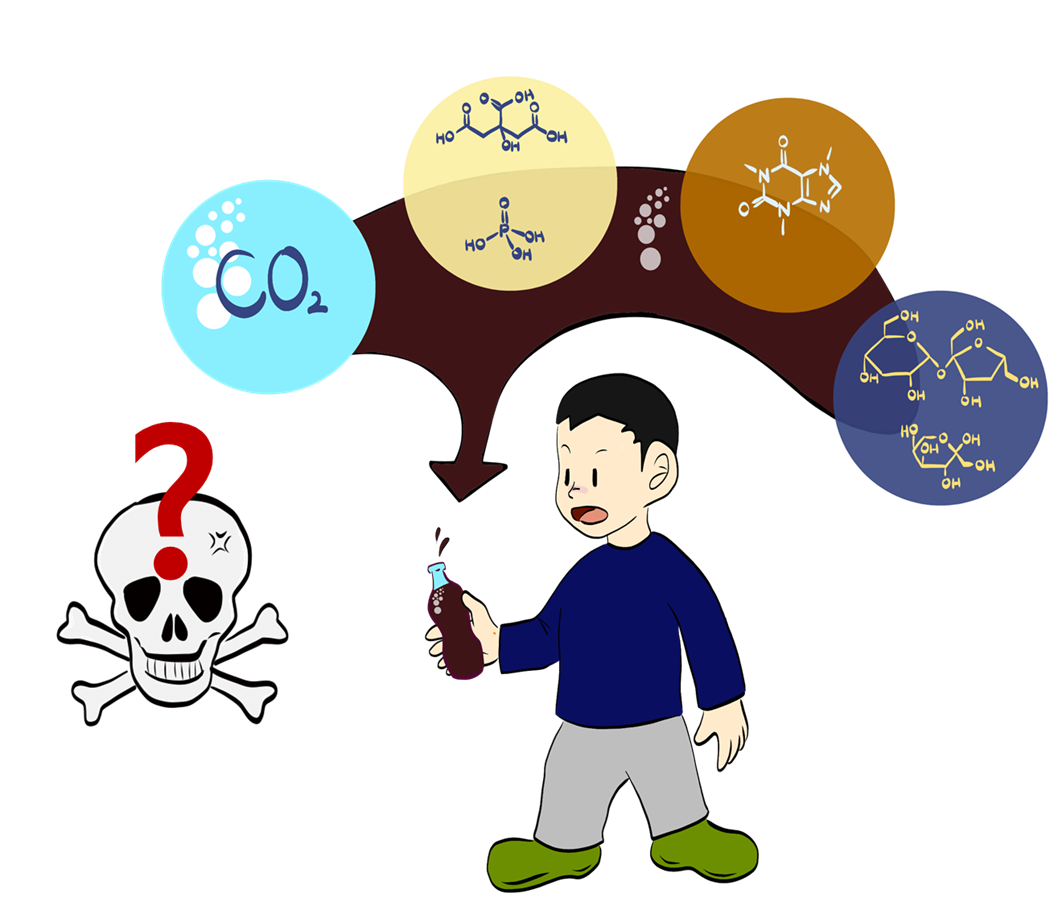
The conflict between a mother who tells her child to drink water and a child who wants to drink soda is common in many households. Cola, a popular soda, is often seen as unhealthy.
Cola contains carbon dioxide (CO2), organic acids such as citric acid and phosphoric acid, caffeine, and sugars as its main components.
Let’s find out one by one how these ingredients work and why they are considered harmful to the body.
Carbonated drinks: Carbonated water with dissolved carbon dioxide (CO2) mixed with food additives
Europe’s limestone-rich soil produces hard water. In the 18th century, carbonated water was developed by injecting CO₂ under high pressure, causing calcium carbonate and magnesium carbonate to precipitate, making the water easier to drink after filtration.
Although the carbonated water is slightly acidic (pH ~ 4 to 6), it is higher than the pH inside the stomach.
It may cause mild irritation to the stomach, but it is unlikely to cause gastrointestinal problems unless consumed in excessive amounts over a long period.

The tangy taste of cola comes from the added weak acids, citric acid, and phosphoric acid.
Citric acid is generally non-toxic and is also a substance formed in our body’s metabolic processes.
It also occurs naturally in fruits, especially citrus ones like lemons and limes.
Large amounts might cause stomach discomfort, but food and beverage concentrations are safe.

Phosphoric acid is essential for all living organisms, being part of ATP, DNA, cell membranes, bones, and teeth.
Phosphoric acid also plays a crucial role in intracellular signaling of proteins for cell metabolism.
Phosphoric acid combines with calcium to form calcium phosphate, a major component of bones and teeth.

Phosphoric acid in cola can cause tooth erosion, deplete calcium for bones, leading to osteoporosis, and form kidney stones.
However, phosphoric acid is present in many natural foods. Fruit juices also contain considerable amounts, though less than cola.
Regular consumption of beverages with a pH below 4 can cause tooth erosion. This issue is common to all commercial beverages, not just cola or carbonated drinks.
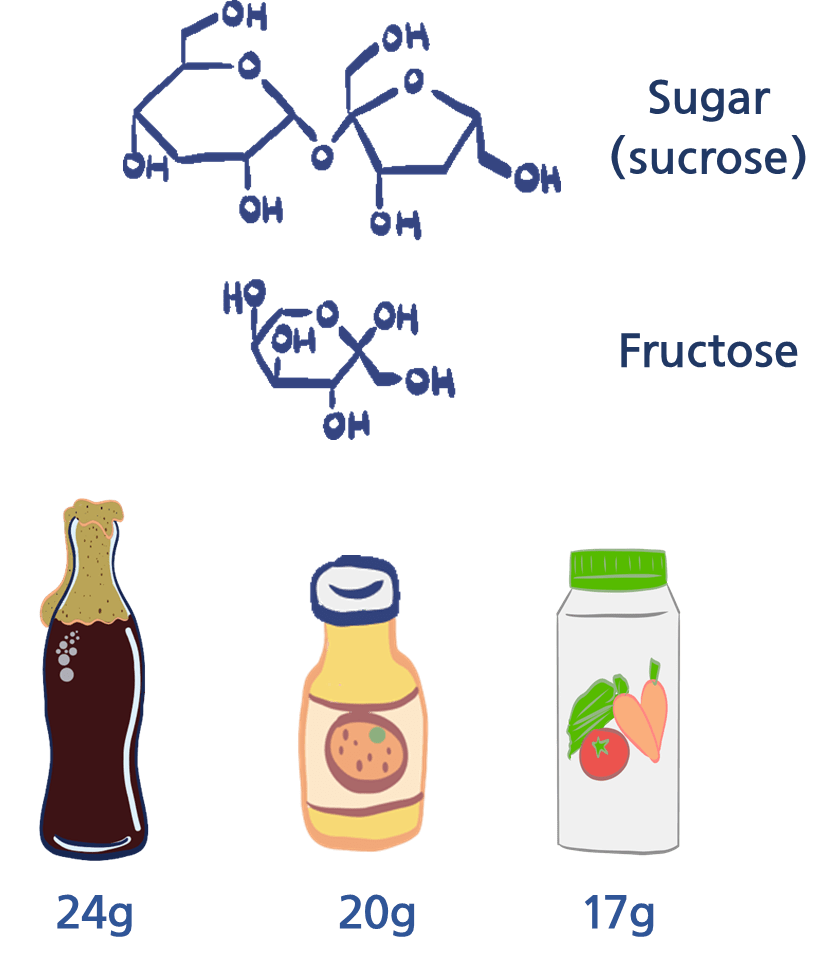
Sweeteners in Soft Drinks are commonly composed with sugar or high-fructose corn syrup.
Average Sugar Content per Serving:
- Soft drinks: 24 g
- Fruit juice: 20 g
- Fruit beverages: 17 g
WHO Sugar Recommendation: Less than 50 g per day (adult)
Moderation: One can (8 oz) of soft drink per day is acceptable for an adult.

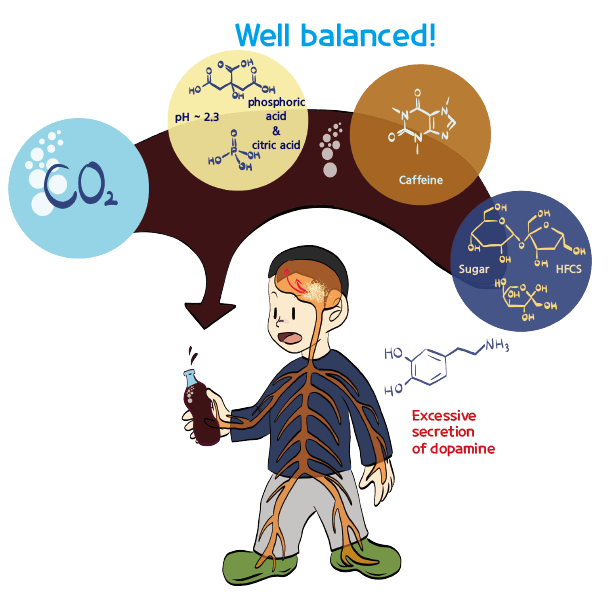
Various media point out the issue of addiction to soft drinks, and caffeine in soft drinks is cited as the main cause of this addiction.
Caffeine can activate the release of the neurotransmitter dopamine. It can cause addiction. Caffeine binds to adenosine receptors instead of adenosine, activating neurons.
Up to 400 mg of caffeine per day is safe.
One cup of drip coffee: 170 mg caffeine
One can of cola (8 oz): 25 mg caffeine
The caffeine equivalent of two to three cups of coffee per day is considered safe without major side effects, so drinking one or two cans of cola should not cause significant issues from caffeine.
Based on ingredients, sodas don’t seem much harmful.
However, addiction is a concern. Neuroscientist Professor Gary Wenk at Ohio State University explains that the combination of sugar, caffeine, and carbonation is designed to make consumers feel good, leading to addiction.
This results in difficulty controlling intake.
Despite their long-time popularity for being refreshing, uncontrolled consumption of carbonated drinks can be harmful.
Fruit juice is generally considered healthy, especially compared to sodas.
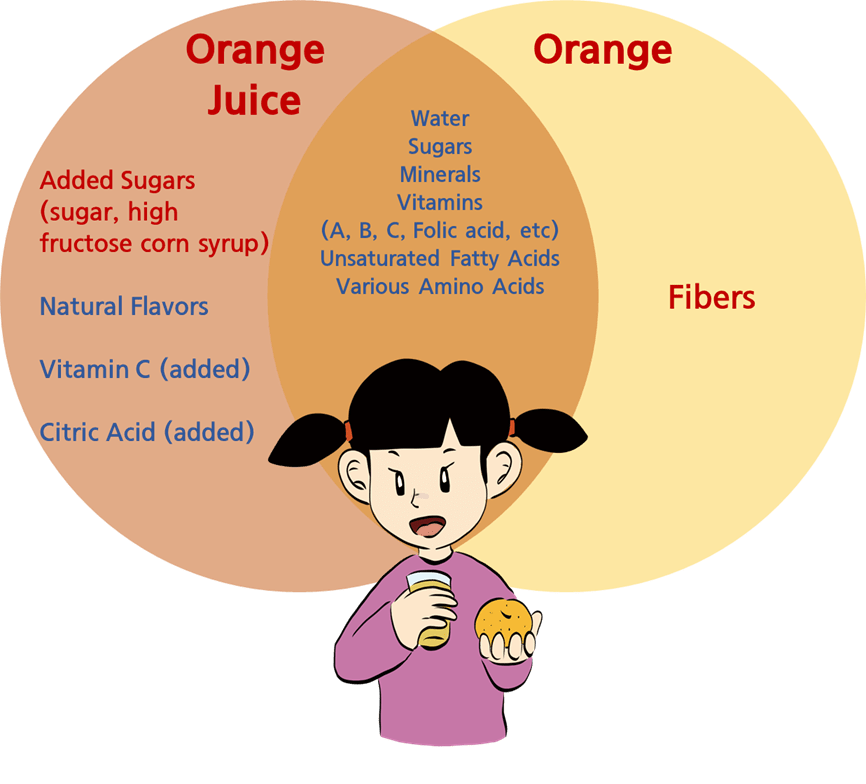
Fruits contain vitamins, minerals, and various polyphenols, including iron, potassium, and magnesium.
Fruit juice contains these nutrients similarly to the fruit itself, distinguishing it from soda, which lack these nutrients unless artificially added.
Unlike whole fruit, fruit juice lacks fiber.
Eating fruit provides fiber, leading to a feeling of fullness and preventing overeating.
Consuming an apple before lunch can reduce overall calorie intake, whereas apple juice may not have the same effect.
Added Sugars: Additionally, fruit juice may contain added sugars, unlike whole fruit.
Both sodas and fruit juices contain 20 – 24 grams of sugar and serve approximately 110 kcal per 8 oz serving. It is recommended that individuals under 18 consume no more than 25 grams of sugar per day.
Sugar = Carbohydrate: One of the three major nutrients. Sugar was once a valuable food component that provided immediate energy for survival.
Sugar triggers excessive dopamine release, rewarding consumption through the pleasurable “sweet taste.“
Our bodies are not equipped to handle large amounts of sugar, so excessive sugar intake can lead to chronic diseases including obesity, type 2 diabetes, liver failure, kidney disease, and hypertension.
Chronic Diseases: These conditions often develop without the patient noticing and are difficult to treat once they occur.
 Leo & Leah
Leave a comment